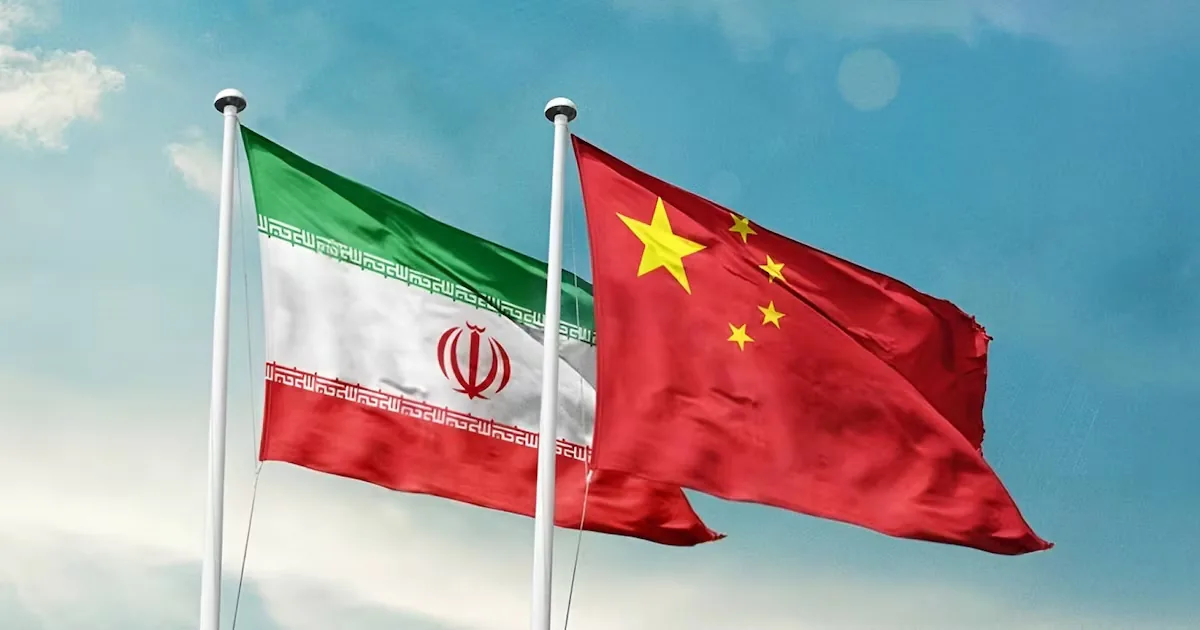







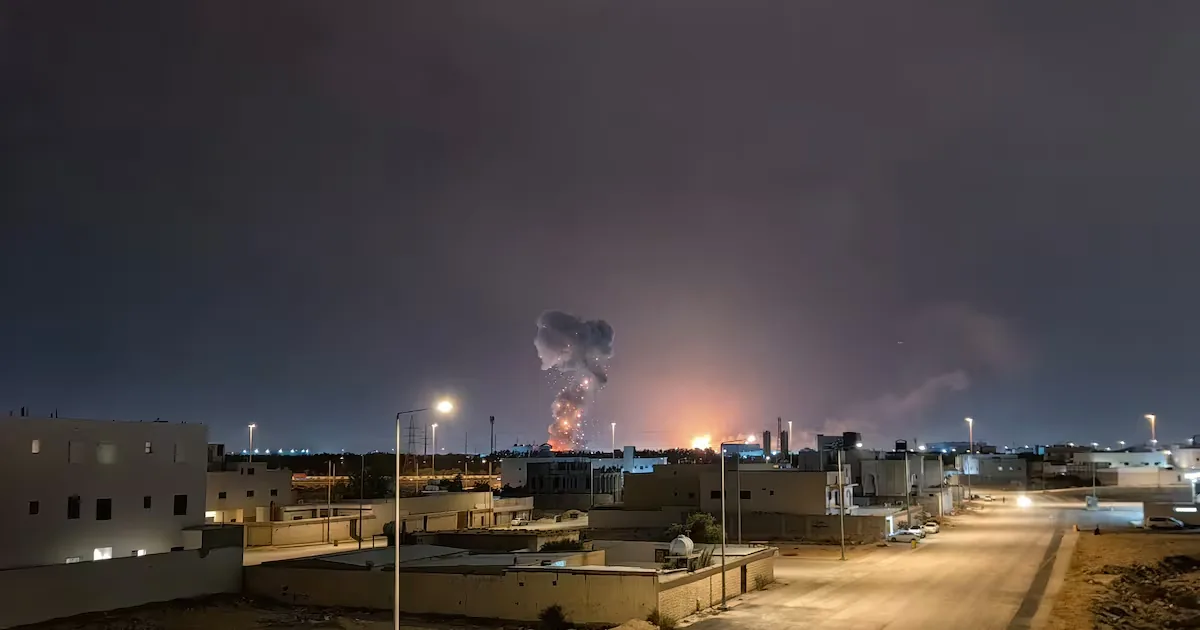
The war between the United States and Iran is spreading further in the Middle East. U.S. and Saudi combat aircraft attacked militias linked to Iran in Iraq on Wednesday, and Iran fired missiles at military bases in Jordan and oil tankers, ending a several-day pause in direct fighting between Washington and Tehran.
Read more Russia launches ballistic missile attack on Kyiv amid warnings of a massive bombing
Fox News quoted President Donald Trump saying that the United States would hit Iran hard in response to the attack. “They are going to get a beating,” chief foreign affairs correspondent Trey Yingst quoted early Wednesday, referring to Trump’s words.
The latest attacks involved Iran-allied groups in Iraq and Yemen, and potentially in Lebanon. Their involvement raised the problematic question of whether Iran might be encouraging its allies to open new fronts in a war that threatens to involve more countries in the region.
The U.S. military stated that the attacks in Iraq were in retaliation for more than 30 drone operations carried out by Iran-affiliated groups in the past 72 hours. No Iraqi militia group has claimed responsibility for the attacks.
The Saudi Ministry of Foreign Affairs said in a statement that the country does not seek escalation but will respond to any aggression.
Meanwhile, Iraqi Prime Minister Ali al-Zaidi called the U.S. and Saudi attacks “unacceptable aggression.” The Popular Mobilization Forces, a coalition of Iraqi militias, many of which have close ties to Iran, said in a statement that at least 20 fighters died in the attacks.
On the other hand, the Iranian Revolutionary Guard said its forces had attacked three tankers but did not specify the location of the ships.
A senior Jordanian government official told The Wall Street Journal that five missiles were intercepted in eastern Jordan’s desert without causing injuries or material damage. The official declined to comment on the specific targets of the missiles.
U.S. troops are deployed at a Jordanian base near the Syrian border and at another airbase in the desert, where an Iranian missile attack killed two U.S. servicemen earlier this month. “The regional environment is undergoing a drastic change,” the official said. Jordan hosts about 4,000 U.S. soldiers at its bases and is a nerve center for U.S. military operations in the Middle East.
According to analysts consulted by The Wall Street Journal, “the attack illustrates a fundamental shift in which the Islamic Revolutionary Guard has become more resolute and feels more comfortable with a state of war that could last for months, rather than opting for peace in which it would have to face public discontent with Iran’s struggling economy and the lethal repression of protesters earlier this year.”
The U.S. and Israeli bombing campaign against Iran, launched last February 28, ended decades in which Tehran and its Revolutionary Guard preferred to keep their actions against the United States and Israel in the shadows, operating through regional paramilitary groups and avoiding direct conflict. With the regime’s survival at stake, the Islamic Republic has launched waves of missiles and drones against U.S. forces and several neighboring countries.
According to The Wall Street Journal, the Islamic Revolutionary Guard Corps (IRGC) has taken on a more dominant role since an Israeli airstrike at the start of the war killed Iran’s former supreme leader, Ayatollah Ali Khamenei. His son, IRGC veteran Mojtaba Khamenei, assumed the position to succeed his father but has not been seen publicly since his appointment.
“This has given greater power to Iran’s military and security elites, as the war also suppressed internal protests that threatened the regime’s control in January. The regime cracked down on those demonstrations by shooting into crowds, causing thousands of deaths and imprisonments,” the newspaper noted.
Read more U.S. urges Latin America to increase defense spending to strengthen security in the hemisphere
“In addition to taking on a more relevant role in a regime with diverse conflicting interests, the Revolutionary Guard also allows, in some cases, regional commanders to make combat decisions independently. This strategy seeks to provide the Guard with flexibility and responsiveness but can sometimes create unpredictability in the Iranian military. Tehran’s changing strategy will likely make it harder to reach a lasting agreement to end the conflict and will increase the risk of more frequent escalations,” it added.
“These guys are not willing to give up anything serious,” Afshon Ostovar, associate professor at the U.S. Naval Postgraduate School and author of two books on Iran, told the Journal. “They have a zero-sum view regarding their relations with the United States and Israel. As long as they can deny the enemy’s objectives, they will have won the battle.”
The attacks increased pressure on Trump, who had suspended bombings against Iran in recent days in what he described as an effort to give diplomacy time.
There are other signs that the conflict is on the brink of a new escalation. In recent weeks, Iran-allied militias in the region have become more deeply involved in the conflict. Yemen’s Houthi rebels launched attacks that threatened maritime transport through the Bab el-Mandeb Strait, which connects the Red Sea to the Indian Ocean, increasing the risk of further disruption to oil supplies and driving up global crude prices.
For experts, Tehran is entering its period of maximum influence. “Rather than merely retaliating for previous U.S. attacks, Iran is making it clear that no place supporting U.S. military operations should be considered out of reach. Jordan becomes valuable precisely because Washington increasingly depends on it,” wrote University of Chicago scholar Robert Pape.
According to the military operations expert, Iran is trying to push U.S. power projection away from the Persian Gulf. “Every additional mile imposed on U.S. aircraft increases sortie times, in-flight refueling needs, logistical loads, and operational costs, while reducing the pace at which U.S. airpower can be generated. At the same time, repeated attacks on facilities supporting U.S. operations increase pressure on regional governments hosting U.S. forces, forcing them to weigh the benefits of the security relationship with the United States against growing internal and military risks,” Pape said in a Substack article.
In summary, Iran no longer primarily focuses on destroying U.S. military power. It is about making that power progressively more expensive, politically difficult, and operationally distant. “The conflict is no longer mainly characterized by isolated retaliations. It is becoming a geographically interconnected contest in which military attacks, proxy operations, maritime traffic disruption, and political signaling reinforce each other across multiple scenarios. The recent joint U.S. and Saudi attacks on Iran-backed militias in Iraq, the constant pressure on maritime traffic in the Red Sea, and the renewed exchange of missile attacks point to the same dynamic,” Pape wrote.
“Therefore, the importance of Jordan goes beyond a single night’s missile exchange. This shows that Iran has begun to challenge not only U.S. forces but the entire regional system through which the United States projects its military power,” he warned.
And this situation has already been felt in Jordan, where hundreds of political, legal, and other figures signed an open letter last week calling for the withdrawal of U.S. forces from the country, in an unusual public challenge to the government.
“We hold that their presence exposes Jordan to security, political, and economic risks that do not benefit any national interest and increases the likelihood that our country will be dragged into a regional conflict in which it does not participate,” they said in the letter.
Despite the increase in air attacks against Jordan, the government has remained firm in its alliance with the United States, largely, according to analysts, because the country heavily depends on U.S. foreign aid. Last year, the United States granted Jordan $1.65 billion in economic and military assistance, according to Jordanian officials.
Read more Paula Data: three unmissable books by Chilean female photographers from Stgo Foto