








The German economy is in a bad moment, with growth stagnant since 2019, affected by US tariffs and Chinese competition, which has led Chancellor Friedrich Merz to seek to use all resources at his disposal to reactivate it: from tax reform to spending on social welfare and even growing calls for breaking with the tradition of retail businesses closing on Sundays.
These businesses are pushing to extend this wave of reforms to the century-old ban on Sunday trading in the country, which once a week turns German shopping streets into ghost towns.
This rule originates from Article 140 of the 1949 Constitution. Taken from its predecessor from the Weimar era, it proclaims that Sundays and holidays are “days of labor rest and spiritual elevation.”
Although many sectors enjoy exemptions, the rule is strictly applied to retailers, who cannot sell anything on Sundays except essential items such as bread, drinks, snacks, cigarettes, and alcohol.
“Germany needs reforms to boost its economy. That is why all options are being explored, or at least should be. And we say: ‘Don’t forget our part,’” said Timo Weber, director of the department store chain KaDeWe, quoted by The Telegraph.
The newspaper said that people who want to open on Sundays face an uphill battle. This is because churches, unions, and politicians across the political spectrum stand in their way.
This even when in most of the rest of Europe, even in relatively religious countries, shops and supermarkets can open on Sundays, at least to some extent. But in Germany, only cafes, restaurants, and gas stations can do so, unless there is a festival.
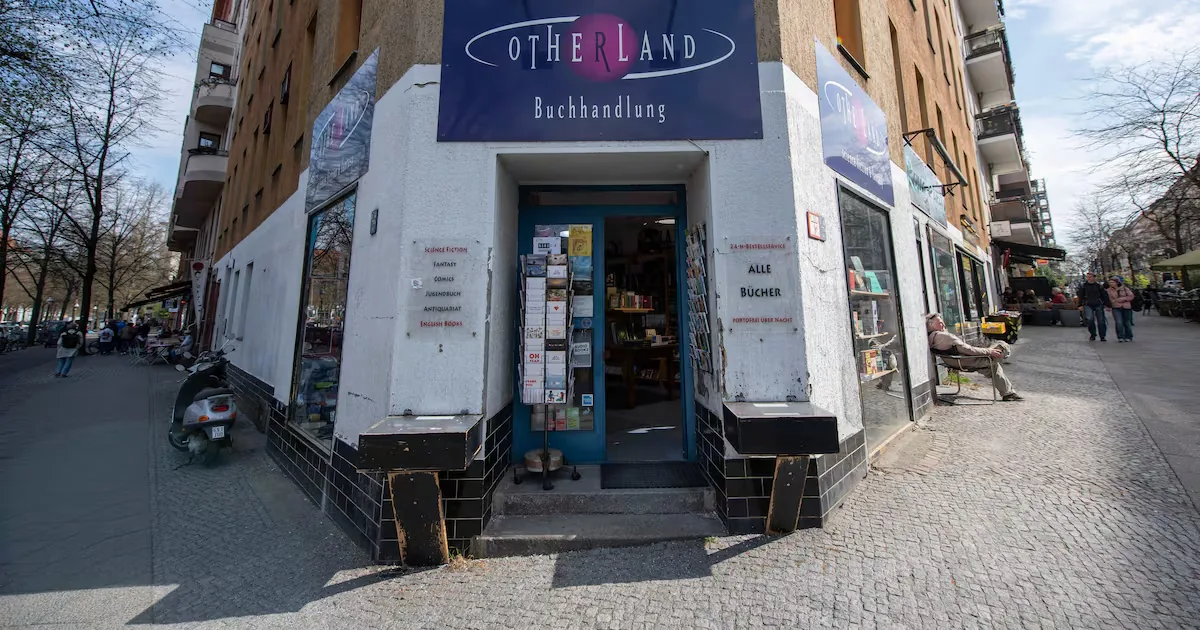
Critics of the ban argue that defining what constitutes “spiritual elevation” is not an easy task. “Why should eating ice cream or bowling be considered spiritual elevation, but not buying a novel?” asked Martina Tittel, owner of two bookstores and a publishing house in Berlin, in an interview with The Wall Street Journal.
“Germany is a secular state,” she said. “If people want to go to church, let them go to church… And if they want to go shopping, let them do that too.”
In this context, The Telegraph noted that Merz has taken advantage of the reforms to reactivate the economy and will allow bakeries and pastry shops to open eight hours on Sundays, instead of just three. The opening hours of public libraries will increase from three to six hours.
This has rekindled the debate over whether the “Sonntagsruhe” (Sunday rest) is a beneficial tradition or a painful anachronism.
Critics argue that while the ban theoretically applies to everyone, its enforcement discriminates against retailers. If doctors, pilots, bus and taxi drivers, restaurant and museum staff, journalists, police officers, and even masseurs can work on Sundays, why not shop assistants?
Churches and social groups argue that Sunday closure offers a break from commerce and fosters social cohesion.
Read more The French center-right adjusts its strategy in response to Le Pen’s advance ahead of 2027
Retailers say that nowadays people shop online on Sundays anyway, so commerce happens regardless.
In that sense, Nils Busch-Petersen, president of the Berlin-Brandenburg Retailers Association, pointed out that these orders are usually handled from Poland. “There are thousands and thousands of employees just behind the Polish border, who work every Sunday to maintain the German illusion of a free Sunday,” he told The Telegraph.
The Wall Street Journal indicated that legal experts distinguish between “working on Sunday,” which is generally prohibited, and “working for Sunday” — all activities necessary to ensure a peaceful rest for the majority who do not work — which is allowed. Stores can sell cucumbers or cans of Coca-Cola because they are considered snacks, but not zucchinis or cans of beans.
Retailers also argue that shopping on Sundays has become a leisure activity, so it should have the same status as other ways people might spend their day off.
Some states allow stores to open some Sundays a year to commemorate important events such as a marathon or a film festival. However, unions have challenged these exceptions in courts and judges have ruled that the festive event, not shopping, must always be the main attraction.
Partly due to restrictions on working Sundays, authorities do not have enough staff to systematically enforce the ban, said Manuela Anders-Granitzki, an official in charge of inspections in the Pankow district in Berlin, to The Wall Street Journal. Checks are only carried out if a complaint is filed, and so far this year the district has initiated 19 proceedings against repeat offenders.
One of the reasons successive governments have resisted reviewing the Sunday ban is the opposition of a multiparty coalition of Christian churches and unionists.
In 2009, Germany’s Supreme Court partially ruled in favor of a lawsuit filed by the Catholic and Protestant churches against a proposal by the Berlin state government to allow shopping on 10 Sundays a year, including the four before Christmas.
Following a lawsuit filed by the Verdi union two years ago, a court banned the opening on Sundays of automated stores operating without staff. Shortly after, the state parliament responded with a law allowing their operation.
Those defending the ban say it is popular. A YouGov survey conducted this month showed that 50% were in favor of Sunday closures and 43% against. However, this situation is changing: last year, a third of respondents were in favor of changing the rules. The younger the respondents, the more critical they are of the ban.
The Free Democratic Party (FDP), of a liberal tendency, showed its support. Its leader, Wolfgang Kubicki, said that ensuring flexibility is urgent and pointed out that those who force store closures should not complain afterward about the stagnation of urban centers. His argument is that relaxing operational restrictions is necessary to reactivate domestic demand.
Read more Zelenski claims attacks against logistics facilities and an oil depot in the Moscow region