






Without announcing it to anyone, CIA Director John Ratcliffe went to Moscow to meet with his Russian intelligence counterparts. Nothing, in particular, has been made public about the conversation, but at the time this visit comes, five years after the last similar one, it seemed that there was a lot at stake.
Read more Menopause: why cardiovascular risk increases
According to reports from American media, Ratcliffe arrived in the Russian capital on Tuesday morning. Neither Washington nor Moscow have confirmed the nature of the visit or with whom he was scheduled to meet, but Russian officials indicated that the content of the conversations had already been communicated to President Vladimir Putin.
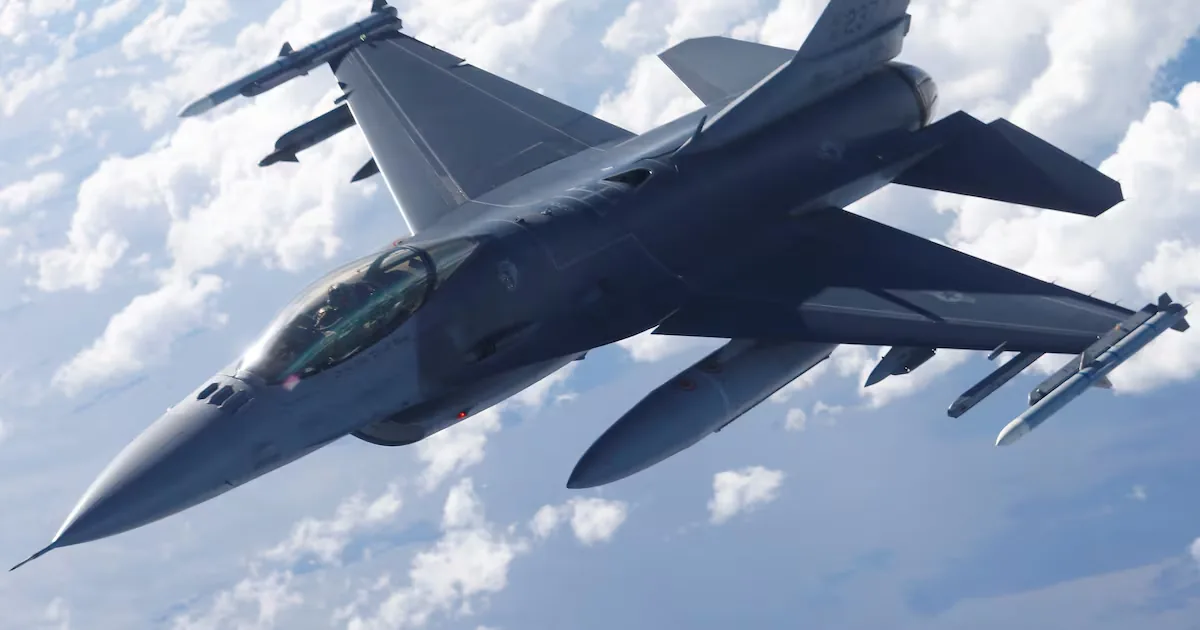
In-person meetings between high-ranking US and Russian officials are rare, and the last one, in 2021, took place just three months before the invasion of Ukraine. Flight tracking data confirmed that a large US military aircraft traveled to Russia from the United States via Latvia on Tuesday, landing at Moscow’s Vnukovo airport. It left the Russian capital that same day, according to Russian state media.
News of the trip emerged after a US Air Force Boeing C-17A Globemaster III transport plane was spotted arriving at a Moscow airport on Tuesday morning, and subsequently, a US diplomatic convoy was seen circulating through the city.
The CIA did not comment on the trip, but Kremlin spokesman Dmitry Peskov told reporters on Wednesday that Ratcliffe held talks with Russian intelligence officials during his visit, although he did not meet with President Putin. “There have been contacts through the security services,” he explained.
Peskov informed journalists that the Kremlin leader was briefed on the talks, but noted that it was premature to predict whether the meeting between intelligence officials could help pull bilateral relations between the United States and Russia out of what he called a “deep crisis,” after more than four and a half years of Russia’s war against Ukraine.
Donald Trump’s administration has also not publicly explained the specific purpose of the trip. The White House occupant described Ratcliffe’s visit as “quite routine” or “semi-routine,” although he later left open the possibility that it could have consequences.
“Now something might come out of this. We are working hard to end that war,” Trump said in an interview with Glenn Beck’s radio show, referring to Russia’s invasion of Ukraine.
One of the things known about the visit is that, before the trip, the United States informed Ukraine that a high-level delegation would travel to Moscow. This, to ask Kyiv to suspend attacks until Ratcliffe had departed, a senior Ukrainian official told CBS.
Axios and CBS News, the media outlets that broke the story, did not specify the names of the Russian officials John Ratcliffe met with, nor the agenda of the talks. These meetings were likely brief: according to the Washington Post, the CIA director remained in Russia for barely four hours before departing.
Russian security services analyst Andrei Soldatov told the US news agency Associated Press that such trips “do not happen every year.” According to his analysis, channels between the intelligence agencies of both countries have remained open for decades precisely because they may be necessary to address urgent national security matters.
The most important precedent occurred in November 2021, when then-CIA Director William Burns traveled to Moscow and met with Putin.
Ratcliffe’s predecessor’s visit took place about three months before the Kremlin ordered what it described as a “special military operation” in Ukraine. Burns then warned the Russian president about the consequences a possible invasion of Ukraine could bring, but his warnings were ignored.
The last major contact between Moscow and Washington was the summit between Presidents Trump and Putin in August 2025, in Alaska. Although an announcement ending the war was expected, US mediation has not achieved progress since then.
Another precedent occurred in November 2022, when Burns met in Turkey with Sergey Naryshkin, head of the Russian Foreign Intelligence Service. On that occasion, according to US officials, the CIA director warned Moscow of the consequences of using nuclear weapons in Ukraine.
Read more Vanessa Lista, Danish expert: “Digitalization is increasingly a geopolitical issue”
The Independent newspaper recalled that earlier this month, Foreign Minister Sergey Lavrov stated that he had sent a series of questions to the US State Department “on the issue of intelligence data and the fact that the United States is much more deeply involved in organizing and carrying out attacks deep inside Russian territory.”
The meeting could also focus on this matter, as Russia seeks assurances about the extent of US involvement in Ukraine. Especially considering that Peskov explicitly mentioned a “deep crisis” in relations between the two countries.
Meanwhile, on the BBC, John Foreman, who served as British military attaché in Moscow between 2019 and 2022, stated that the visit could focus on “escalation management,” given speculation that recent drone activity in Germany could be linked to Russia.
“Typically, Americans don’t send such a high-ranking official to Moscow without prior notice and on such short notice, unless something significant is happening,” the expert assured, although he also noted that the trip could be related to the release of American detainees currently in custody in Russia.
This, recalling that Ratcliffe participated in negotiations for the release of Russian-American citizen Ksenia Karelina, who was imprisoned in Russia for over a year after being accused of providing support to Ukraine.
According to The Independent, it could be a message to protect NATO. “US officials want to convey the message that it’s better not to directly test the United States and NATO,” explains Mykola Bielieskov, an analyst based in Ukraine, referring to intelligence reports. “The CIA director visits the capital of a hostile state with an important objective,” he highlighted.
Iran could also have been at the center of the discussion. The trip could become a warning to Russia to avoid any interference in the war that, today, Tehran and Washington are starring in, said Angela Stent, senior fellow at the American Enterprise Institute, to Deutsche Welle.
“We know from various sources that the Russians have been supplying the Iranians with intelligence on US targets in the Middle East and that, presumably, they have facilitated some of the Iranian attacks,” she stated.
“We also know that the Trump administration is imposing new sanctions on Iran and countries that trade with it. Russia is an important trading partner that supplies it with both weapons and intelligence,” she detailed.
France 24 highlights that Ratcliffe’s visit contains, at the same time, two seemingly contradictory messages. On the one hand, it demonstrates that even amidst the war in Ukraine, direct channels exist between the security apparatuses of the United States and Russia. On the other, the Kremlin insists that bilateral relations continue to go through a “deep crisis.”
What is confirmed is that Washington and Moscow have decided to keep a high-level intelligence channel open, at one of the most delicate moments in their relationship since the end of the Cold War. The importance of that contact will depend on whether it manages to translate into something more than communication: a reduction of risks, progress on Ukraine, or, eventually, a new stage in relations between the two powers, notes the French media.
However, Bloomberg reported this Wednesday that Russia is preparing to intensify attacks against Ukraine after concluding that peace negotiations have reached a stalemate, according to three people close to the Kremlin.
For now, Russia is weighing an intensification of powerful conventional ballistic missile attacks against Kyiv, including the capital’s center, and infrastructure targets in other Ukrainian cities, said the people, who asked not to be identified because the matter is sensitive.
Read more The death toll rises to 95 and 600 are missing due to floods in northern Nepal