






When they put him on the phone to talk to the people from BMG Chile, the legendary producer Doctor Dread couldn’t believe it. “I thought it was a joke”, he says to Culto. On the other end of the line was Oscar Sayavedra who needed his services to work with Gondwana, then an emerging reggae band.
Read more AKRIILA releases their second album “lucy looked at the world and noticed it is spinning”
“He told me that the band loves the productions I did with Israel Vibration. So I told Oscar: ‘Well, send me a cassette. And if I like the group, then I’ll go’,” he recalls. Shortly after, he received a cassette with the band’s music. He listened and loved it. That’s when he decided to fly to Chile.
Born in Washington, Doctor Dread (whose real name is Gary Himelfarb), got involved with the Jamaica scene in the late 70s. He founded the RAS Records label and worked with names like Inner Circle, Steel Pulse, Bob Marley, The Wailers, among others.
That’s why Dread was the most appropriate name to work as producer on the memorable self-titled 1997 debut album, which includes tracks that became classics like Armonía de Amor, Chainga Langa, and Sentimiento Original. A bond that was repeated in the next two works, Alabanza (2000) and Made in Jamaica (2002).
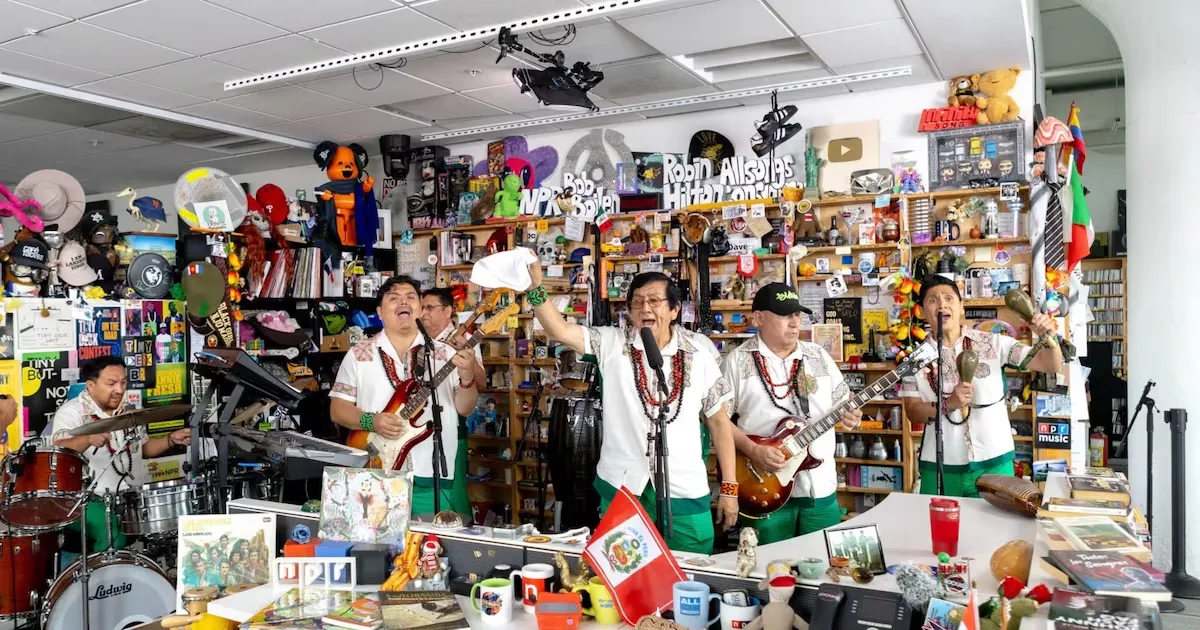
Today, visiting Chile ahead of the Gondwana and Quique Neira reunion show – for which they have been rehearsing for nearly two months in a room in Providencia – Dread remembers that first meeting. “All these people, this group with dreadlocks, were there to welcome me at the airport. We went to the studio, and what happened was magical. The vibe, the energy… you can’t plan something like that. Great horns, the great Quique [Neira], I-locks [Labbé], and simply the whole band, the keyboardist, the drummer, we made a beautiful album. I think we started a reggae and rasta movement in Chile and I’m very proud of the three albums I recorded with Gondwana, and that’s why I’m here today.”
On those records, Doctor Dread had an ally, sound engineer Jim Fox. A man of imposing presence but whose fine ear has been at the service of reggae talents like Israel Vibration, Don Carlos, among others. He is also in Chile and will be responsible for recording the concert on September 5 at the Bicentenario Stadium in La Florida.
From his studio based in Washington D.C, Fox took care of mixing those three Gondwana albums. “[Doctor Dread] brought the recordings he made here, took them to me, and most of the band also went there”, he recalls. “So it was also their first time in the U.S. Everyone came to the studio and we spent a week or two working on the first album together and had a great time. My favorite song? Almost all the songs, you know? Of course, the hits.”
Fox noticed the group’s potential and has a particular memory of that debut album. “For the second album, Dr. Dread came back down [to Chile], recorded, brought it back to Washington and they brought me a Gold Record plaque they had gotten from the first album. So I’ve had a copy of that hanging in my studio ever since.”
Doctor Dread was also key on Made in Jamaica, the album the group recorded at Geejam Studios in Porto Antonio, overlooking the Caribbean Sea. It all started with a visit to the island. “I wanted to take them to Jamaica so they could experience Jamaica”, he recalls. “So we went there and toured the whole island, even did some recordings in Kingston with some Jamaican artists: Tony Rebel, Don Carlos, and Dean Fraser. And we made a very cool song at Gussie Clarke’s Music Works studio. So, after that experience and hiking waterfalls, they had the full Dr. Dread experience in Jamaica.”
It was then that together with Sayavedra they decided to work at John Baker’s studio, the same where bands like The Rolling Stones and No Doubt have worked. “So we went there, settled in Port Antonio, went to the beach during the day, ate jerk chicken and were very Jamaican. We recorded this album and, since I’m not super creative, I came up with the name Made in Jamaica, which made a lot of sense because we made it there. And as usual, I went back to Jim Fox’s studio and together we mixed it. By then, I was already touring with Gondwana in the United States. I think they were getting some concerts in Europe and Mexico, I took them to Puerto Rico too, I wanted the world to know Gondwana. So it seemed like a natural progression to make the first two albums in Chile, and then go to Jamaica. And my favorite song from that album, I have to admit, is Felicidad. I love that song.”
Once the album was recorded, Dread took the material to Jim Fox. “Everyone came to the studio, so they were there with us in Washington and we mixed it together. Same process, and when everything was finished, I mastered it and sent the master tapes to RAS Records for manufacturing,” he recalls.
The trio of international collaborators for the show is completed by Errol Brown. A man of slow speech and easy smile who worked as a sound engineer with legends like Peter Tosh, U-Roy, Gregory Isaacs and since 1979 also participated in sessions with Bob Marley & The Wailers at the Tuff Gong studios. He has also worked doing live sound for Steel Pulse, a group with which he has come to Chile, which allowed him to meet Gondwana and Quique Neira.
For the concert at the Bicentenario, Brown will be at the soundboard. Basically, he will be responsible for what the audience will hear. “It’s all just dancing, celebrating, and singing along. That’s the main goal, to have them in that vibe, you know? And I love it, I love it. How do I know the sound is good? When I see people start moving and dancing, that’s when I know this is working.”
-Errol, if Gondwana or any artist asked you for advice to approach Bob Marley’s sound, what would you tell them?
Errol Brown: Well… times are different now. Young people don’t want Bob Marley’s sound, they want to move forward, something more energetic. Bob Marley’s was more laid-back, until we did Buffalo Soldier or Could You Be Loved, that’s when we picked up the pace a bit, just before he died. But I wouldn’t advise that because times are different now. You have to move forward for the young people. They dance, jump, and shout at concerts, so it’s time to move on. Marley felt that way too when we did Buffalo Soldier and Could You Be Loved, he was looking for that more “disco” type reggae, more upbeat.
Doctor Dread: One thing I’ve noticed as a producer, because that’s mainly what I’ve done in the reggae business, is that you always try to keep the artist pure and true to themselves. Every artist is different, so you don’t really try to change an artist. You just try to bring out the best in them. Like Peter Tosh, you just bring out the best in them.
-What would you highlight about Gondwana as a band? And what caught your attention about Quique as a singer?
Errol Brown: I really love their attitude and energy. And the band is very tight. They don’t miss a beat. Even now, rehearsals, I hear them play and it’s like they’re listening to a click track (metronome track).
Jim Fox: They’re so precise they can’t be more precise. It’s amazing. Very impressive. And the songs, energetic, very energetic.
-Over the years, Gondwana became a reference band for reggae in Latin America. How do you explain that a Chilean band achieved that position?
Jim Fox: They achieve it with their work. All we do is transfer and translate what they produce and what they bring. So all that is theirs, that’s the way they sound.
Doctor Dread: Yes, they add an element of Latin horns, which is not the same as you might get from a Jamaican reggae band. And then they add an element of Latin percussion. And then you have Quique, who is simply one of the great singers. I think in some ways they give it a little Latin flavor.
Errol Brown: And many colors. Yes, great, it can’t be better, trust me. And that horn section? The brass section is great.
Doctor Dread: I remind you that when they just started… trombone, tenor sax, and trumpet. A perfect combination. You can hear the sound quality and everything.
Jim Fox: And about the percussion, man, that percussion guy is precise. Well, all of them. They sound pretty good, no exceptions, all of them.
Doctor Dread: Anyone who misses this concert on Saturday will regret it. It’s going to be one of the best concerts in Chile, I tell you. And you know, this is more than just a concert. This is like a message the world needs to hear about people coming together and Quique and Gondwana reuniting with very positive energy. This is much bigger than a music concert. It’s people coming together and, hopefully, when they leave, they’ll take it with them, be more loving, care more about people, and show love. And I think that’s what Gondwana has always been about. So it’s something beautiful.
For this Saturday’s show, tickets for Pacífico Centro, Andes, and Galería are already completely sold out, while the last available spots remain in Cancha. Doors open at 17:00 hours and Gondwana and Quique Neira are expected to go on around 21:00 hours. Last tickets available on the Puntoticket system.