



President Donald Trump warned that there could be a strong retaliation for the deaths of U.S. soldiers caused by Iran, following a tragic weekend for the U.S. military.
Read more We tried it and liked it: skin under another light
“Every time Iran kills a U.S. soldier, it will pay for that murder many times over!” he wrote on Truth Social on Monday.
The White House occupant said he had communicated his instructions to the top military commanders. “This directive has been transmitted to the Secretary of War, Pete Hegseth, the Chairman of the Joint Chiefs of Staff, Daniel Caine, and all military leaders,” he wrote.
The Pentagon confirmed three U.S. deaths over the weekend, two of them at a military base in Jordan and one in northern Iraq.
The Department of Defense identified on Monday two U.S. soldiers who died in Iranian attacks in Jordan. First Lieutenant Tyler James Feehan, 25, and soldier Isabella Gonzales, 19, died in the Friday attack on the Muwaffaq Salti airbase in Jordan. The military continues to examine unidentified remains found at the attack site, indicating that the death toll could rise.
Meanwhile, the U.S. Army reported on Sunday that another of its members died in combat during the controlled detonation of a downed Iranian drone. “A U.S. service member died in combat on July 18 in northern Iraq during the controlled detonation of unexploded ordnance from a downed one-way Iranian attack drone. A second service member was injured and continues to receive medical treatment for a minor injury,” the U.S. Central Command (CENTCOM) reported in a social media post.
According to CNN, with these deaths, the number of U.S. military personnel killed in the war, which has now lasted almost five months, rises to 17.
Trump will attend the solemn transfer of U.S. military personnel fallen in the war with Iran, the White House announced on Monday. “President Trump will attend tomorrow night the dignified transfer of our fallen heroes at Dover Air Force Base. The president and the entire White House are praying for their families,” White House Press Secretary Karoline Leavitt wrote in a post on X.
The seriousness of the situation was acknowledged by the Iranian president himself, Masoud Pezeshkian, who emphasized on Monday that the country is immersed “in a large-scale war” with the United States that includes armed confrontation and the economic situation, amid the recent exchanges of attacks despite the ceasefire agreement reached in April and the memorandum of understanding signed in June to advance towards peace.
“The reality is that Iran is today immersed in a large-scale war,” said the leader, who argued that “this war is not just a missile war, as the enemy has concluded that it cannot force the Iranian nation to surrender through military attacks.”
Thus, he highlighted that “the most important battlefield is the economy and the livelihood of the population.” “At the military level, the Armed Forces defend the country with authority, but if economic pressure causes social discontent and it spreads, the enormous social capital created by the population in support of the system could be undermined,” he explained. “The enemies of this nation are trying with all their power to block our path to progress,” Pezeshkian denounced, according to a statement published by the Iranian Presidency.
For his part, the Speaker of the Iranian Parliament, Mohammad Bagher Ghalibaf, accused the United States of “constantly transferring new military equipment” to the Middle East while “claiming to seek to end the war.” “They expect our intelligence to be equal to their modest IQ,” he stated.
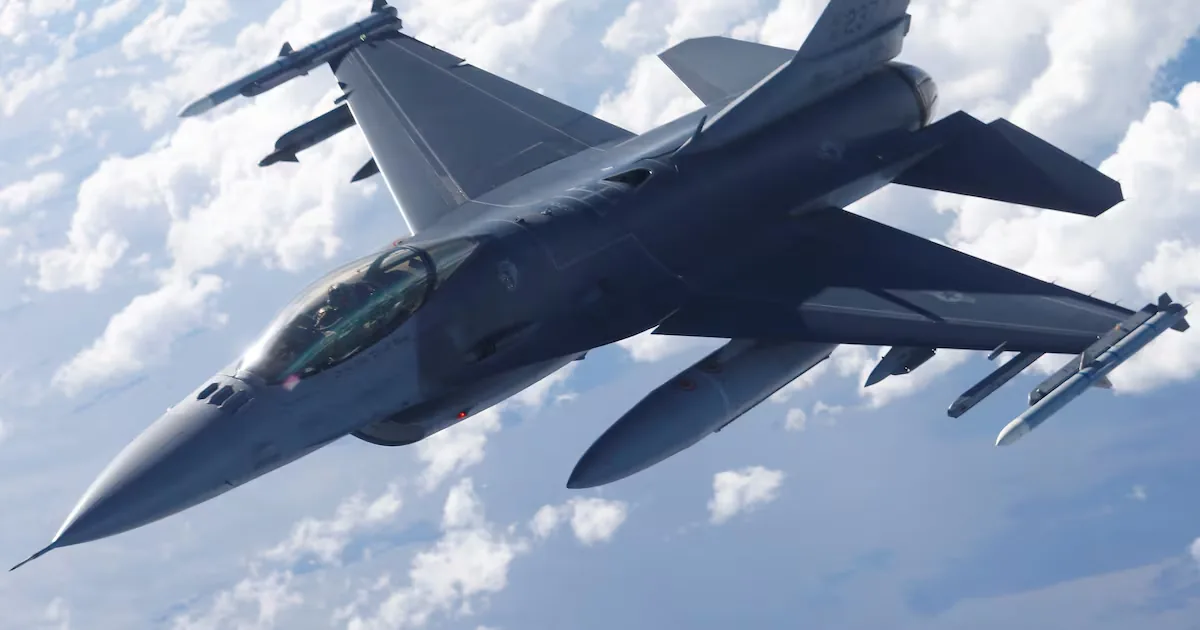
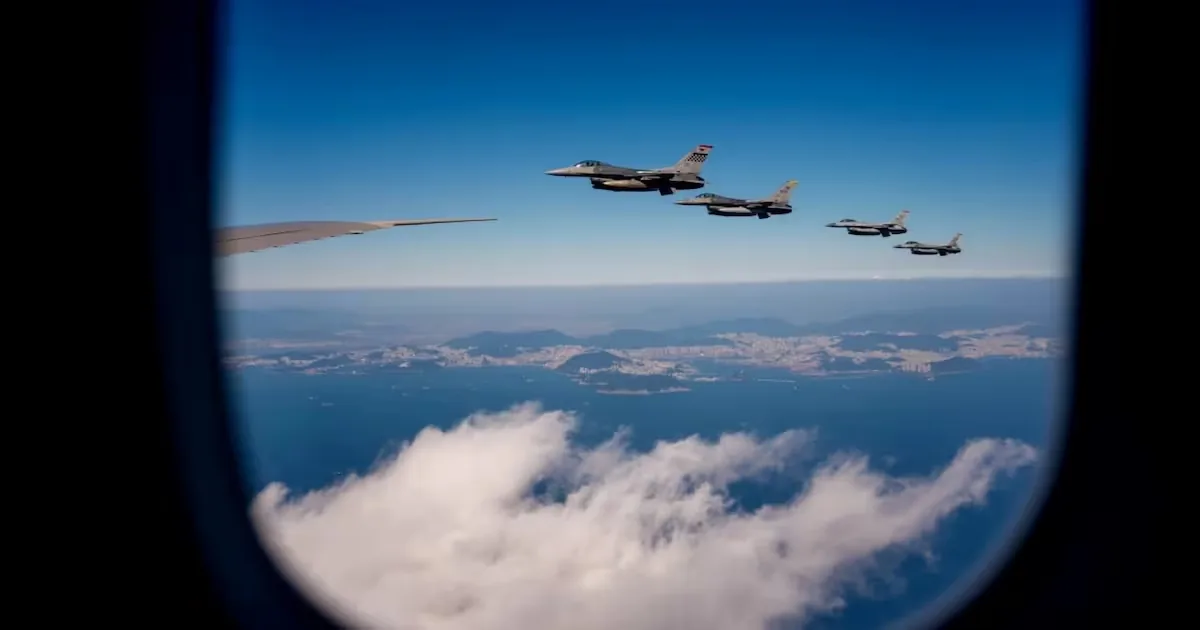
Regarding this, CNN reported that the United States is sending more aircraft to the Middle East amid growing fears of a prolonged regional conflict. According to a U.S. official, the United States plans to send additional F-16 and F-35 fighters from bases in Europe, as well as additional tanker aircraft for in-flight refueling.
Dozens of U.S. tanker aircraft have arrived in Israel in recent days and continue to arrive, an Israeli source said. During the March operation, there were approximately 94 of these aircraft. The number had dropped to 40 but has been increasing since last week, this source detailed.
“The additional resources could expand President Donald Trump’s options when weighing how to proceed in escalating the conflict,” the television network highlighted.
Last week, Trump received a briefing in the Situation Room on options to intensify the war. He has considered whether to try to capture Kharg Island, a key Iranian export hub, or bomb Iranian nuclear facilities in Pickaxe Mountain, CNN indicated. The spokesperson for the Iranian Ministry of Foreign Affairs, Esmaeil Baghaei, warned that there could be “repercussions” if the United States takes action against Kharg Island.
Read more Solo Di Medina returns to the scene with a new song: “Yuri Gagarin”
Meanwhile, Kuwaiti forces reported intercepting “hostile targets” for the second time on Monday, after Iran launched a first salvo early in the morning. In Bahrain, sirens sounded for the fifth time on Monday, according to the country’s Ministry of Interior. The attacks occurred hours after U.S. forces carried out the ninth night of attacks against Iran, The Washington Post reported.
In a statement released by state media on Monday morning, the Islamic Revolutionary Guard Corps of Iran said it had attacked multiple U.S. military facilities at the Ali Al-Salem airbase in Kuwait.
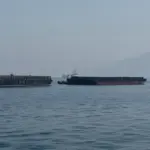
Additionally, on Sunday night, a ship sailing off the coast of the United Arab Emirates was hit by a projectile, according to the United Kingdom Maritime Trade Operations Center (UKMTO), a British maritime transport monitoring agency.
Amid the intensification of attacks, the average price of gasoline in the United States reached $4 per gallon on Monday, the second time it has hit that mark since the war disrupted the global oil supply, according to the American Automobile Association (AAA). Gasoline prices first reached the $4 mark on March 31, a month after the joint U.S. and Israeli bombing campaign against Iran.
The price of oil also rose above $90 per barrel on Monday for the first time since June before retreating to just under $89, an increase of about 1%, the Post indicated.
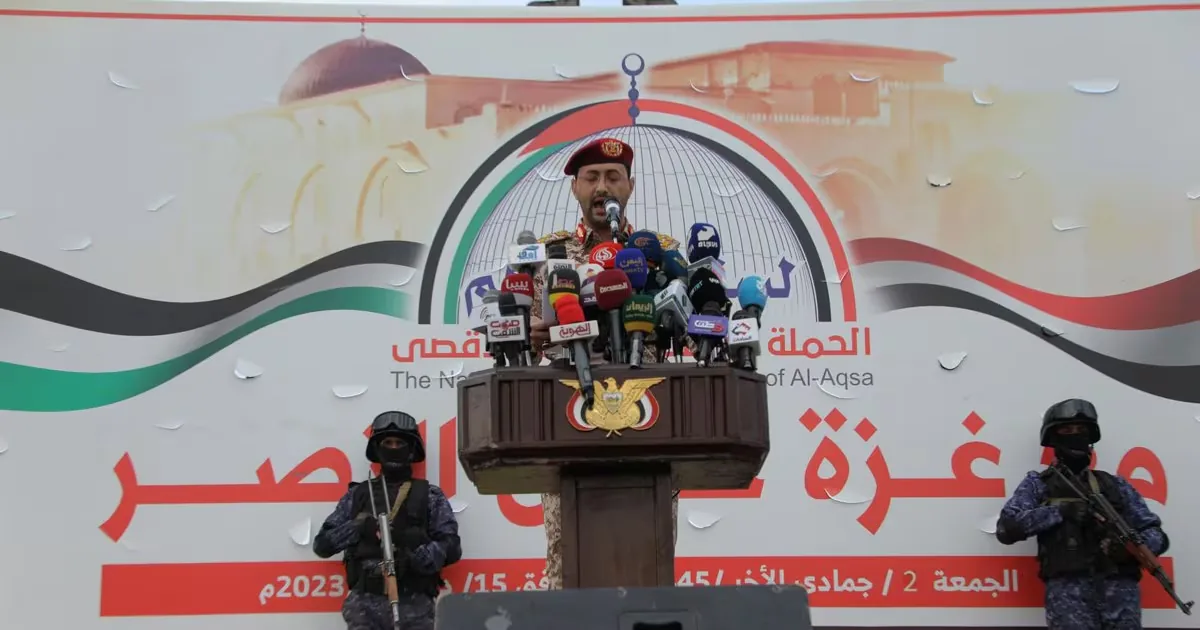
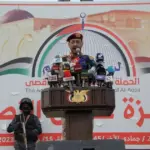
Adding more volatility to the situation in the Middle East, Yemen’s Houthi rebels announced on Monday the imposition of a naval blockade against Saudi Arabia in response to Riyadh’s ongoing “siege” amid rising tensions between the parties following attacks on the airport in Yemen’s capital, Sana’a, and the subsequent retaliatory bombing of Saudi airport facilities in Abha.
The Houthi military spokesperson, Yahya Sari, indicated in a statement released on their social media that the “maritime embargo against the criminal Saudi enemy” is applied under the concept of “an eye for an eye” and detailed that the naval blockade will take effect “immediately.”
In recent days, the United States has expanded its targets beyond Iranian coastal sites housing radar and drone facilities to include roads, tunnels, railways, port infrastructure, and, according to Iranian media, a desalination plant.
Iran, in turn, has expanded its list of targets to seven countries in the region, and official media suggested that important ports of the Arab Gulf states could soon be added. Kuwait has been one of the countries most affected by Iranian attacks, with damage to a desalination plant and an oil refinery. Jordan has also suffered frequent bombings.
For Tim Lister of CNN, the conflict is at a “turning point.” “It could lead to a new round of mediation and negotiation. However, for most analysts, this seems unlikely. Neither side appears willing to dialogue; both have declared that the memorandum of understanding agreed upon in June after weeks of hard negotiations is no longer in effect,” he wrote.
“It is increasingly evident that events are beginning to get out of anyone’s control,” said Danny Citrinowicz, an analyst at the Institute for National Security Studies in Tel Aviv. “Although both Washington and Tehran initially seemed interested in keeping the confrontation within certain limits, the conflict is alarmingly approaching a point where those limits could collapse,” Citrinowicz commented on X.
“The confrontation could extend far beyond its current scope, involving the Gulf States more directly in the conflict and putting additional strategic targets and critical infrastructure at risk,” he added.
“Iran is adapting to U.S. defenses by firing high-speed maneuverable missiles at U.S. bases in the region,” the Institute for the Study of War wrote on Saturday, adding that Iran has deployed cluster munitions on a larger scale to maximize damage.
All indications are that the Tehran regime believes it can withstand Trump, having mobilized popular support around the funeral ceremonies of Ayatollah Ali Khamenei. The collective leadership that emerged in the absence of Khamenei’s son, Mojtaba, the new supreme leader, seems to believe that resistance is the only option for now.
“The current rulers of Iran believe that any show of moderation will only provoke greater U.S. pressure,” wrote Iranian analyst Vali Nasr in the Financial Times.
Read more The Odyssey conquers cinemas and emerges as an early favorite for the 2027 Oscars