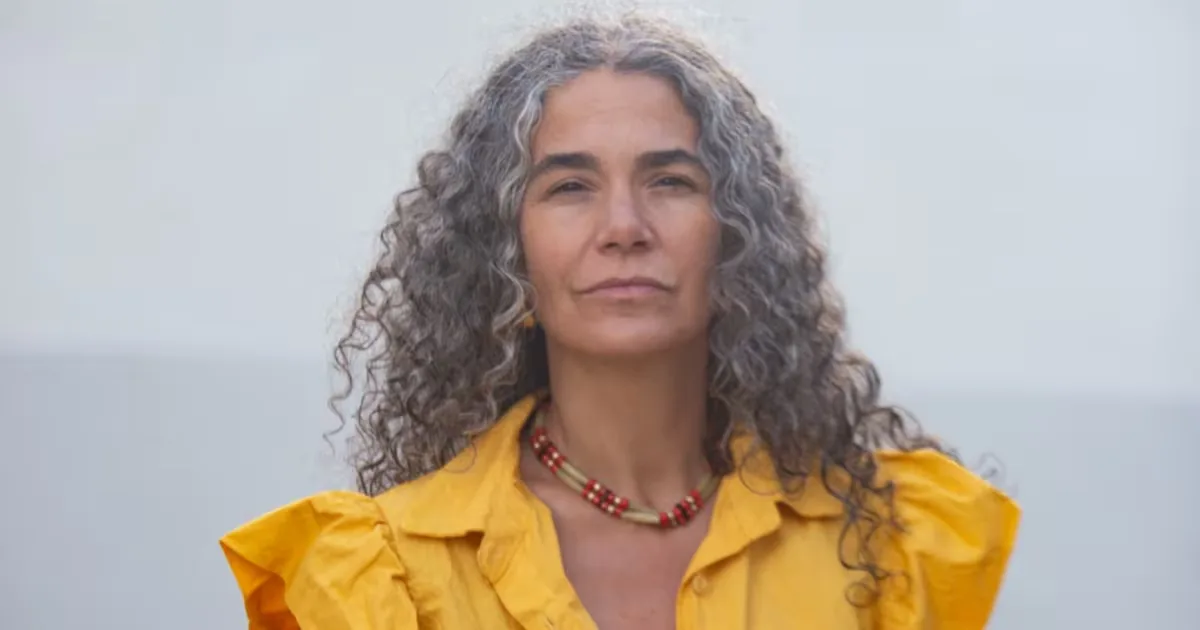










For years Catalina García, a mother and advertiser, ended nights “curled up” crying in bed. Her eldest son had intense dysregulations after the birth of his sister, and she felt that nothing she did worked. “Calm down, it’s a phase,” “you have to be firmer,” they told her repeatedly. She tried to follow that advice, but the feeling was always the same: every attempt seemed to make things worse.
Read more The story of a Chilean of Palestinian descent deported by Israel
“It couldn’t be that my days with my son were shouting at the person I love most, thinking ‘I can’t stand it.’ Then I would go to bed crying, feeling like the worst mom in the world, with a feeling in my gut that this wasn’t right,” she recalls.
The turning point came when someone told her about the child’s brain and the neuroscience behind children’s behaviors. “It was as if someone had put subtitles on this thing I felt: he spoke Chinese, I spoke Russian, and we didn’t understand each other. Literally, it was that little piece of information that made me switch, change the way I looked at my son, his behaviors, and also the role I had to fulfill as a mom,” she says.
From then on, she didn’t stop seeking information, researching, and studying. Over the years, she became an author and promoter of neuroparenting, certified in Positive Discipline and digital coexistence, and completed a Master’s in Emotional Intelligence and Neuroscience. And the more she learned, the angrier she got thinking about why that knowledge wasn’t common knowledge. “Everyone teaches you that the stomach is immature and that children can or cannot eat certain things. Everyone knows that. But why does no one explain that the brain is even more immature? It doesn’t take a year to mature; it takes 25 years. And they leave us improvising with the most important thing for social coexistence, which is understanding behaviors.”
From that conviction was born Tono y Tino, her first story, with which she seeks to translate neuroscience concepts into simple language so that children and adults can better understand what happens in the brain during development. After its publication, inquiries from other families began to multiply. Today Catalina gives talks, workshops, and personalized support, working with parents who often arrive feeling as lost as she once did.
—What do the families who come to you have in common?
Most arrive very overwhelmed. They have heard different recommendations, were told one thing, then another, and don’t know where to start. Without looking for it, I realized there was an order to move forward and ended up turning it into a methodology.
The first step is to understand the brain. If you don’t understand what dysregulations are, which is the correct word to talk about a tantrum, and you address them in the traditional way, with punishment or criticism, you’re already starting off wrong. You’re putting a brain on the defensive, and that brain won’t listen.
First, you have to know how to calm that brain. Then comes empathy and making the other feel recognized. Only then can you talk about limits. Because it’s not the same if a behavior comes from jealousy or anger. If you don’t understand what emotion is behind it, you don’t know what that child needs.
When you start those three steps, you begin to know yourself better, your children, and your family. You stop reacting and start being a more proactive dad or mom. You start identifying patterns and building your own strategies.
—In recent years, the so-called respectful parenting has also started to receive criticism. Some parents feel it has become a new source of demand. Do you share that diagnosis?
Absolutely. In fact, those of us who dedicate ourselves to this use the concept of respectful parenting more and more carefully because it ended up being loaded with a very perfectionist image, as if there were only one correct way to be a good dad or mom. But there is a conceptual error there. Respectful also means respecting yourself, teaching your children that they have to respect your times, your spaces, and your limits.
That’s why today I prefer to talk about human parenting. Talking about human parenting makes it seem more real. We are not perfect, and one of the things I teach most is that your children don’t need you to do it perfectly. They need to see you make mistakes, see you angry, and also see you apologize. That is also part of the training they need for life.
There is a mistake in wanting to do everything perfectly. Many times I tell a mom who is going to be alone for a week with two small children: ‘Let go. What are you going to let go of? If this week you want to give them noodles with sauce every day, what does it matter? Nothing will happen to them. I prefer that you take care of your emotional well-being and that of your children rather than trying to meet an impossible list.’ I don’t want families to carry another demand.
Read more Alex Anwandter concert schedule at Teatro del Lago
One of the topics that began to appear strongly in her work with families was, of course, screen use. Scenes like a child refusing to turn off the tablet, exhausted parents repeating for the last time that it’s enough, or endless negotiations to get “five more minutes” have become part of the routine in many homes.
From there was born Tono y Tino y las pantallas, the second book in the series, which is officially released this Tuesday and was developed in collaboration with the Foundation for Digital Coexistence, led by expert Soledad Garcés, and supported by Amanda Céspedes. Through the same characters from the first story, the publication seeks to explain what happens in the child’s brain in the face of the digital world and provide tools so that families and educators can accompany the use of technology from understanding and not just prohibition.
—A moment ago you said you don’t want families to carry an impossible demand. How do you talk about screens without turning them into another source of guilt for parents?
The first thing is to understand that screens are not the enemy. The problem is the lack of information and not knowing how to manage them. I always make an analogy: screens are like a knife. A knife is very useful, and we all have one at home, but misused and without criteria, it can become an extremely dangerous weapon.
We know our children will need to learn to use a knife, but we don’t leave them alone. First, we accompany them, then we do it with them, then we watch them, and only when we see they develop that skill do we leave them alone. With screens, exactly the same should happen, only we are talking about something much more complex.
—So, what is the first thing parents should understand?
That when children are small, the main problem is not the content but what screens displace. Every time a child is in front of a screen, they stop doing other things that are fundamental for the development of their brain: playing, interacting with other people, manipulating objects, talking with their family. That is a growth window that does not repeat with the same intensity. Later, those skills can be developed, yes, but later and more slowly.
Many times we think it’s just a little time to entertain them, but that entertainment ends up replacing experiences that do nourish brain development. And sometimes, it also replaces something equally important: shared time with adults.
—But in practice, there are mothers and fathers who arrive exhausted and resort to screens because they simply have no other option.
And that’s exactly why I don’t want to add another impossible demand. If a mom is alone, going through a very stressful week, and by wanting to do it perfectly she ends up fighting with her children or yelling at them, I prefer she use a screen, but a screen with criteria. Hopefully not a cell phone, hopefully not video games, and that it be an exceptional resource, not the rule.
My invitation is not to live with guilt but to get informed. Understand what stage our children are at, what they need, and what they are being exposed to. Because when we first understand, then we can talk with them and help them develop criteria. Then it stops being an imposition and becomes a decision they can also understand.
—Who needs these stories more: children or adults?
I always say my stories are books for adults disguised as children’s stories. What I seek is for parents to first understand these concepts and then be able to talk about them with their children in simple language. That’s why all the books start with a brief introduction for adults. I tell them: “It’s five pages, please read them.”
The idea is that then the story does the rest. I no longer have to explain all the neuroscience. If one day I tell you ‘your bear turned down the music,’ you will understand what we are talking about. Children understand it too, and we start sharing the same language.