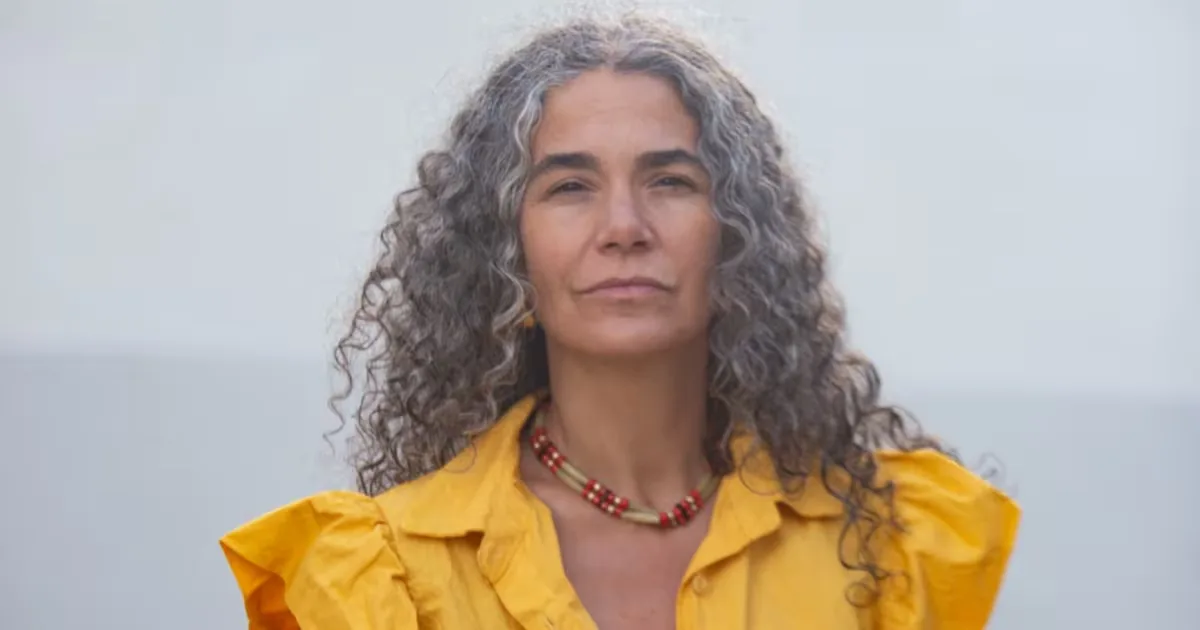









Daniela Medina’s (56) WhatsApp has no schedule. Messages can arrive at night because the power went out, on a Sunday afternoon because someone needs a residence certificate, or any day, at any time, because a neighbor died and their family needs to find a place to hold the wake. “There is always a query or a concern, a theft, someone who needs guidance or simply someone looking for someone to turn to,” she says. Daniela is president of the Integration and Progress Neighborhood Board of Graneros and also of the Communal Union of Neighborhood Boards of the commune. That is why, when asked what a normal week in her life is like, she says she does not know such a thing. “A typical day or week for a leader does not exist, because this work has no schedule.”
Daniela is no exception. 82% of those who lead territorial and functional organizations in Chile are women, according to the Communities 2026 Survey, conducted by Fundación Junto al Barrio and applied to 298 leaders from different regions of the country. The figure reflects something that many have probably seen at some point in their own neighborhoods: when it comes to organizing, managing, knocking on doors, or finding a solution to a common problem, it is often women who end up doing it.
And it is not just about getting a streetlight fixed or paving a street. The survey revealed that 84.2% of organizations carry out actions related to security; 80.5% support neighbors with paperwork and access to services; 76.2% work on public spaces and housing; and 66.8% promote initiatives related to health. But perhaps what best shows how far their work has reached is in other figures: more than half (51.7%) provide emotional support or direct care, and 37.6% support families during mourning and funerals. In short, besides managing the neighborhood, these women also end up taking care of it.
Carolain Pavez (43), president of the Villa El Ensueño Neighborhood Board of Los Vilos, experiences this often. She says that being a leader means becoming “a bridge between people and solutions,” but in practice, that means much more than holding meetings, organizing activities, or talking to authorities. It means listening, advising, and being attentive even to what neighbors do not say. “Sometimes just with a look you realize something is not quite right. You listen, advise. You even try to be a psychologist,” she says jokingly. There are neighbors, young people, and children who approach her simply to vent. That is why Carolain does not talk about leadership as a position; she talks about commitment, being available, and becoming, as she herself says, “that person to turn to day by day.”
Luz Herrera (61) knows well that availability Carolain talks about. As president of the Villa América Neighborhood Board of Los Vilos, she often receives people who come with problems that have little to do with what one might imagine as the traditional tasks of a neighborhood board. “We as leaders not only manage issues related to the territory but also health issues of many neighbors who do not have a family support network,” she says.
That it is mainly women who end up occupying that role does not seem coincidental. Daniela believes there is something about a role many have exercised for years within their own homes and that, in some way, extends afterward to the community. “Many times we take care of our family and children, and that affection also extends to our neighbors and the community. But being a leader is not just about loving people; that affection must turn into action,” she adds. And that action can be accompanying someone who is alone, but also asking, insisting, making calls, knocking on doors, or taking charge of those daily problems that, as she herself says, “many times no one wants to take on.”
However, the fact that women have taken care of much of these tasks all their lives does not mean that caring for a neighborhood happens spontaneously or comes for free. Behind that availability are hours of work added to the other shifts many already have. According to the survey, 48% of leaders dedicate more than ten hours a week to their work, which is largely done voluntarily and without pay.
Daniela knows this well. Being a leader did not make any of her other life responsibilities disappear, and that is why she says recognizing this work means also looking at what is normally unseen. “It is understanding everything behind this work, the time we give, the family responsibilities we still have, and often the effort we make to be present in our community. These are things that are not seen because we are still moms, wives, and daughters.”
In addition to the hours, there is everything they have had to learn to do their job well. Writing a project, applying for a competitive fund, handling computer tools, preparing a budget, and then accounting for the resources are skills that many times no one taught them. “Many things we learn over the years, making mistakes, studying on our own, asking questions, and making errors,” Daniela says. The problem is that learning on the go also has a cost: a good idea for the neighborhood can be left out of a fund simply because those promoting it do not have the necessary tools to formulate it.
Read more Historic heatwave: The worst summer hits Europe
That is why when these leaders talk about recognition, they are not precisely thinking about tributes. Carolain describes her work as getting up early and going to bed late, holding meetings, writing letters, and going door to door, “all that without a salary, pure love for our community.” But she knows that love for the neighborhood is not enough to sustain everything. “We do not ask for applause; we ask for support. Because if they support us, we can do much more for our neighbors.”
And there institutions also have something to answer. Although 78.5% of those who participated in the survey identify the municipality as their main ally, almost a third (32.9%) point to municipal or state bureaucracy as one of the main obstacles to solving their communities’ needs. Private support is even lower: only 15.5% identify companies as a relevant actor in the territory.
There is a question Carolain asks herself more and more often: who will continue doing all this? “I worry about who will take the position,” she says. And it is not just her concern. The Communities 2026 Survey shows that 43.3% of those who lead social organizations are 60 years or older, while only 1.7% are under 30.
Carolain sees young people with desire, new ideas, and skills that could be very useful for community work, especially in technology and social networks. But she also believes many look at what she and other leaders do and see something difficult to take on because of how demanding it is. “They see it is a lot of sacrifice, without pay, and sometimes with little recognition,” she says. That is why, she maintains, the challenge is to open space for them and accompany them: “Not to throw all the responsibility on them at once.” Her fear is that if there is no renewal, “all the work we have done will fade over time.”
Luz, on the other hand, is more critical about the participation of new generations and acknowledges that the lack of youth interest is one of the main concerns for those who lead organizations today. “We are enormously worried because we see that young people do not show interest in being leaders, and those who do only think about their own interests, beliefs, and positions, without showing social or community work.”
Daniela, for her part, prefers to look at renewal from another perspective. She believes young people can take on a role in the life of their communities, although they probably will not do it in the same way as previous generations. “We cannot expect them to participate in the same way or with the same enthusiasm that we did years ago. The challenge is to find new ways to approach and awaken that interest or that spark for their community,” she assures.
For her, taking the baton does not have to mean replacing one generation with another: “We have experience and territorial memory. They have other tools that today make communication easier. We have to share our experience but also open up and learn from these new generations.”
Read more TikTok agrees to pay US$400 million in the U.S. for illegal collection of minors’ data