






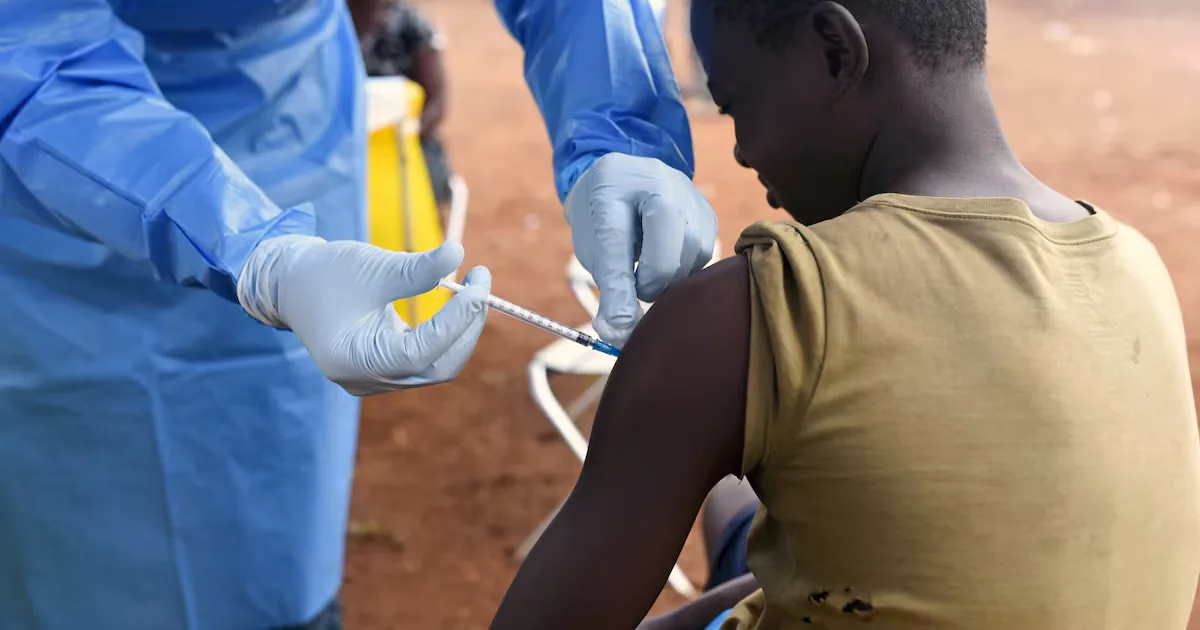
The Democratic Republic of Congo has raised the number of confirmed Ebola cases to 452 since declaring the outbreak on May 15, amidst a rapid spread of the disease in the east of the country.
According to Congolese authorities, 71 new infections were confirmed in the last 24 hours, increasing concern about accelerated community spread. The official balance also records 82 deaths associated with the outbreak.
Most of the new cases are concentrated in the province of Ituri, where 65 infections were reported in a single day. Another six were reported in North Kivu, an area also affected by violence and instability.
The outbreak corresponds to the Bundibugyo strain, a less common variant of the Ebola virus. The situation is particularly concerning because there are no approved specific vaccines or treatments for this strain, unlike other variants of the virus.
According to health reports, infections have been detected in 17 health zones in Ituri, seven in North Kivu, and one in South Kivu. Additionally, linked cases have been reported in neighboring Uganda, raising regional alert levels.
Given the advance of the outbreak, the World Health Organization (WHO) and the Africa Centres for Disease Control and Prevention presented a preparedness and response plan for US$518 million, with an initial duration of six months.
The objective is to contain the outbreak in the areas where it is active, strengthen health surveillance, and prepare neighboring countries to detect and respond quickly to eventual infections.
Read more Iran denies using Lebanon as a ‘bargaining chip’ in negotiations with the United States
The Director-General of the WHO, Tedros Adhanom Ghebreyesus, stated that the priority is to stop transmission and support countries that have already activated control measures.
From Africa CDC, its Director-General, Jean Kaseya, described the outbreak as “serious,” but urged against fear and assured that previous experience shows that this type of emergency can be contained if acted upon in time.
The new outbreak is developing in a region marked by armed conflicts, population displacement, and weak health infrastructure.
In recent days, attacks attributed to rebel groups in the east of the country have hindered containment efforts, making it difficult to trace contacts, isolate patients, and for medical teams to work.
The situation has also generated preventive measures in neighboring countries. Uganda temporarily closed one of its border crossings with the DRC for fear of the virus spreading, which has affected trade and usual transit between both countries.
The current outbreak is already considered one of the most significant recorded in the Democratic Republic of Congo, a country that has faced multiple Ebola epidemics since the virus was first identified in 1976.
Read more Latin America: The most polarized region in the world?