






U.S. President Donald Trump assured this Thursday, July 23, that the civil nuclear cooperation agreement negotiated by his administration with Saudi Arabia is conditioned on the kingdom establishing diplomatic relations with Israel through its adherence to the Abraham Accords.
Read more Zelensky expects to resume negotiations with Russia before autumn
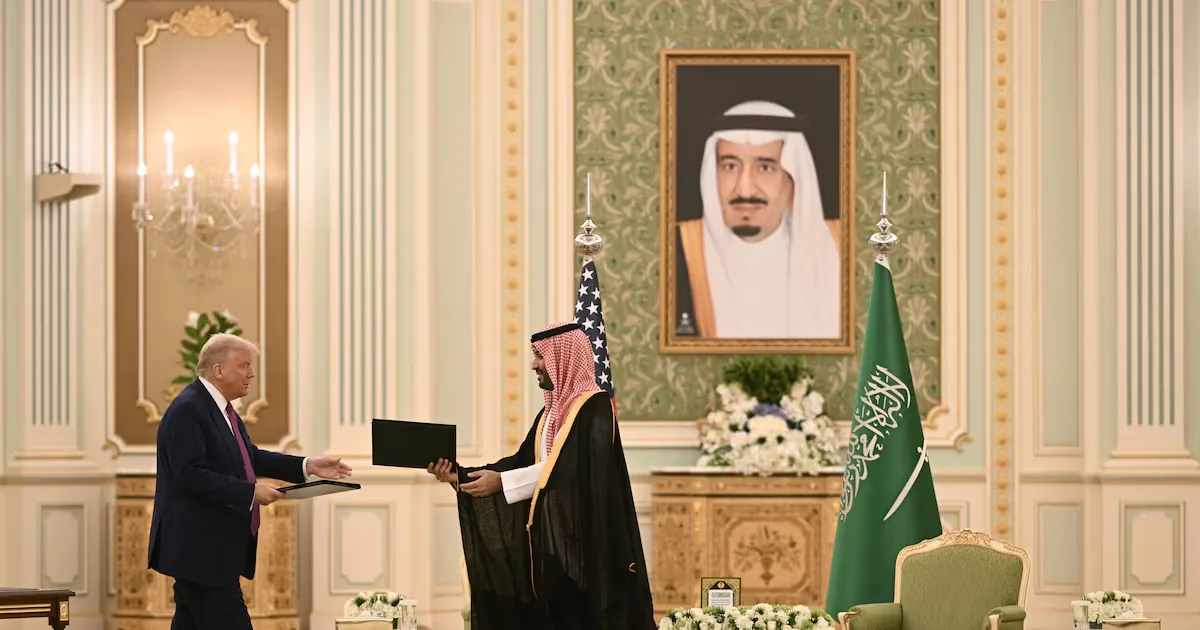
Trump’s statement, published on his Truth Social platform, comes a day after Washington and Riyadh announced an understanding to develop a Saudi civil nuclear program with U.S. technology, an agreement that still needs to be ratified by the U.S. Congress.
“The civil nuclear energy agreement (…) will be approved, but it is entirely subject to Saudi Arabia adhering to the highly respected and successful Abraham Accords,” Trump wrote. The president also insisted that the pact “will not include material enrichment” and reiterated that the United States only supports nuclear facilities intended for civil, not military, purposes.
The understanding, known as “123 Agreement” under U.S. atomic energy legislation, seeks to allow cooperation between both countries for the development of nuclear energy for peaceful purposes and, according to the White House, complies with the non-proliferation standards established by U.S. law.
The Trump Administration maintains that the agreement contemplates the highest international safety standards and opens opportunities for U.S. companies to participate in the development of the Saudi nuclear sector.
However, the president’s statement introduces an element that had not been publicly raised in the official announcement: linking the approval of the pact to Saudi Arabia’s decision to normalize its relations with Israel.
The issue has also garnered attention because, while Trump assured that the agreement would not allow uranium enrichment, initial reports on the understanding indicated that Riyadh aspired to develop capabilities related to the nuclear fuel cycle, an aspect particularly sensitive due to its potential dual use, both civil and military.
The Abraham Accords were promoted during Trump’s first term and allowed the United Arab Emirates and Bahrain to establish diplomatic relations with Israel in 2020. Subsequently, Morocco and Sudan also joined this normalization process.
Read more Why Trump is targeting Pickaxe Mountain in Iran
For Washington, getting Saudi Arabia – the largest Arab economy and the world’s leading oil exporter – to join these agreements would represent one of the most significant diplomatic shifts in the Middle East in recent decades.
However, Riyadh has maintained a consistent position: it argues that it will not officially recognize Israel until there is a credible roadmap for the creation of a Palestinian state. This stance has been maintained even after efforts by the administrations of Joe Biden and now Trump to expand the Abraham Accords.
Talks to achieve that goal also came to a virtual standstill after the Hamas attack on Israel on October 7, 2023, and the subsequent war in the Gaza Strip.
The condition announced by Trump comes at a time of high regional tension, marked by the rivalry between Saudi Arabia and Iran and by Washington’s efforts to contain the Iranian nuclear program.
From the U.S. perspective, a civil nuclear agreement with Riyadh could strengthen the strategic alliance between both countries and contribute to diversifying the kingdom’s energy matrix. At the same time, the eventual normalization between Riyadh and Israel would significantly alter the political and security balance in the Middle East.
However, the proposal also faces challenges. In addition to requiring U.S. Congressional approval, the agreement will depend on Saudi Arabia accepting a condition it has publicly rejected until now: establishing relations with Israel before there is concrete progress toward the creation of a Palestinian state.
This demand turns the future of the nuclear pact into a negotiation that transcends the energy sphere and fully enters regional diplomacy and security.