









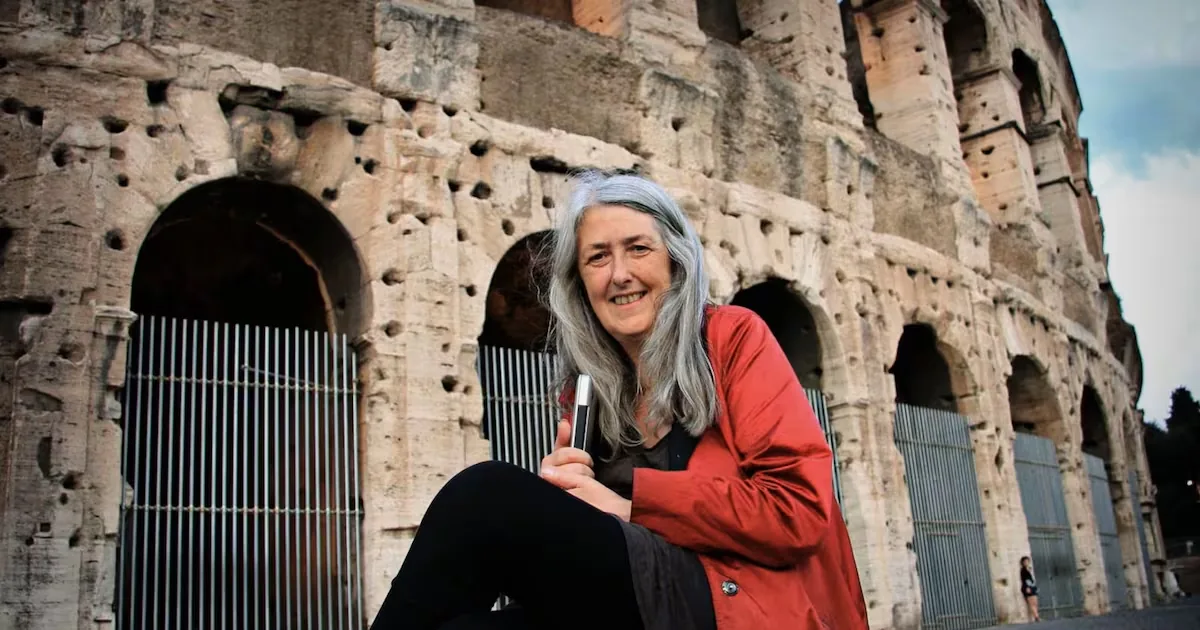
A four-thousand-year-old roll. That was the object that captured Mary Beard’s attention on her first visit to the British Museum with her mother. She was five years old. The roll was at the back of a display case and, due to her height, she couldn’t see it. A museum curator opened the case, took out the roll, and held it inches from her face. “The wonder of that was fascinating and deeply memorable,” she recalls in this book where she reflects on the question: What are the classics for? In a close and personal tone, the prestigious classicist does not omit the thauma, the amazement that the classical world awakens, but she does so without solemnity: “You can get more from the classics if you venerate them less,” she says. The book is a journey through fun, fallible, controversial, and of course also admirable aspects of classical antiquity. Just as the French Revolution took Roman symbols and Mussolini wanted to dress in their grandeur, left-wing and far-right extremist movements claim Roman icons, but the classics have no sides, she emphasizes. The classics, she states, “are sometimes a pleasure, often destabilizing and frequently surprising, but above all invariably revealing and interesting.”
Read more New York Mayor considers ordering Netanyahu’s arrest during UN visit
Professor Kuno Adler, a scientist of Jewish origin, returns to Vienna from New York. It is the mid-1950s, the traces of the war are still visible: Allied troops continue to occupy the city. At the train station, Adler takes a taxi to the center. He was finally back. “There he was, and there was everything; although the paths crossing the road, once flanked by trees, were now stripped, without plants, only some bare trunks remained standing. Otherwise, everything was there. And suddenly, the temporal mismatch that had made him dizzy with illusions and delusions took shape, and he was real, everything was real, an indisputable fact. He was there. The only things missing were the trees, and that comparatively trivial sign of destruction, for which he was unprepared, caused him immeasurable sorrow.” Adler is one of the characters who returns or tries to return to his city after the Nazi invasion and the war. Born and educated in Vienna, Elisabeth de Waal lived in England and at the end of the 1950s wrote this novel that was only published in 2013 and where she questions the possibility of return: although they return, the characters are not the same who left Vienna, and the city is the setting of a deeply wounded society.
Read more Hooded subject opens fire in bar in Brazil, leaving two dead and three injured
It was winter. She wore a red scarf. The puddles woke up covered with frost, the wind swayed the grasslands, large dark clouds gathered in the sky, and noses turned red like strawberries. The fog descended from the mountain to the family house, where the fire was lit. The family was prepared for winter. Then he and she, the siblings, climbed the tree while the wind blew the leaves. “Look, how beautiful,” she said before losing her balance. Then a thud and silence fell. A long, sad, and somber silence. The protagonist of this story clung to that silence and to his sister’s red scarf. And one day he decided to leave, to escape the sorrow. Thus, he became a shadow in the city, not knowing how to carry the loss. Until one afternoon he reactivated his memory, his past, and the memory of his sister. With a simple and transparent narration, avoiding sentimentality, and delicate black and white drawings, with some colored figures, this book explores grief, memory, and love: somehow, searching within himself, the protagonist reconnects with her voice, and protected by that red scarf, he will learn to overcome the winter of his life.
Read more Supreme Court of Brazil blocks Milei’s visit to Bolsonaro due to house arrest restrictions