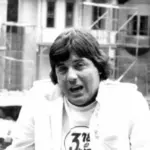







The former Bosnian Serb general Ratko Mladic, who was serving a life sentence for genocide in the bloody 1992-95 war in Bosnia, died in the United Nations detention center in The Hague at the age of 83, according to the Belgrade television channel Informer TV on Thursday.
Read more Death toll from floods in northern Nepal rises to 270
Mladic, the former Bosnian Serb military chief nicknamed the “Butcher of Bosnia” for his role in the 1995 Srebrenica massacre, had suffered several strokes in recent months. He was serving a life sentence in The Hague for genocide, war crimes, and crimes against humanity after overseeing the Srebrenica massacre, the worst bloodshed in Europe since World War II.
Serbian state officials and Mladic’s family had requested his release due to his delicate health condition, but the court in The Hague rejected their petitions.
He was the military figure of a brutal trio, politically led by former Yugoslav president Slobodan Milosevic and former Bosnian Serb leader Radovan Karadzic, as the former Yugoslavia descended into carnage after the fall of communism.
Karadzic, arrested in 2008, was found guilty in 2016 of charges almost identical to those of Mladic, and his sentence was extended to life imprisonment three years later.
Milosevic fell from power in 2000 and was arrested the following year and sent to The Hague for trial. He died in 2006, just as his trial was about to conclude.
The 1992-1995 war left around 100,000 dead and 2.2 million displaced.
The most infamous atrocity was committed in Srebrenica, where Serbian forces under Mladic’s command executed 8,000 Bosnian Muslim men and boys who had sought refuge in what was supposed to be a UN-protected enclave.
Mladic was captured on May 26, 2011, in a farming village north of Belgrade, the capital of Serbia, after nearly 16 years on the run, ending one of the longest manhunts in modern history.
He is believed to have had protection from allies in the Serbian Army and intelligence services. His wife, Bosiljka, and his son, Darko, unsuccessfully tried to have him declared dead, The New York Times reports.
Finally, he was captured alone, with two loaded pistols at his side, and surrendered voluntarily. “Congratulations,” he said when officers burst in. “I am the one you were looking for.”
Mladic’s 2017 conviction by an international tribunal for genocide, crimes against humanity, and war crimes marked the end of a dark and bloody chapter.
When handing down the life sentence, presiding judge Alphons Orie stated that Mladic’s crimes were “among the most atrocious known to humanity.” Mladic appealed the verdict, which was upheld in 2021.
In addition to being the mastermind behind the Srebrenica massacre, Mladic was also ultimately convicted of multiple offenses related to the siege of Sarajevo, the capital of Bosnia, which lasted nearly four years and resulted in 10,000 deaths, including 1,500 children.
According to The New York Times, Mladic’s arrest was a key moment in Serbia’s long effort to move past its status as a pariah nation. It removed a major obstacle to the country’s still-pending accession to the European Union, which had grown tired of successive Serbian governments’ refusal to capture him.
Ratko Mladic was born into poverty in the remote village of Bozanovici on March 12, 1943, when the area was part of the Independent State of Croatia, a Nazi puppet state dominated by fanatical Croatian nationalists.
His father, Neda Mladic, a Serb member of the communist partisan resistance, died when Ratko was a small child, and his mother, Stana (Lalovic) Mladic, raised him along with his two brothers. His family’s experience instilled in Mladic a deep fear that Serbs, unless they had the advantage, would always be persecuted by Croats and other ethnic groups, The New York Times highlights.
As a young man, he worked as a metallurgist but soon turned to the Army for his training. With his mental sharpness, physical strength, and charisma that inspired deep loyalty, Mladic quickly rose through the ranks of the Yugoslav People’s Army.
It is said that early in his military career, he adhered to Josip Broz Tito’s version of communism, which rejected nationalism and instead advocated Yugoslav brotherhood as a way to keep the fragile coalition of multiethnic and multireligious Yugoslav republics united.
Tito died in 1980, and after Milosevic stoked nationalist resentments and Yugoslavia began to disintegrate in the early 1990s, Mladic took up Milosevic’s cause: to stop separatism and ensure Serbian dominance, the majority ethnic group. In 1992, a month after the declaration of independence of the Republic of Bosnia, Mladic’s forces began the siege of Sarajevo.
In 1994, his daughter Ana, a medical student just over 20 years old, committed suicide with her father’s prized military pistol, apparently distressed by his actions in the war.
Zoran Stankovic, former Serbian Defense Minister and friend of Mladic, who performed the autopsy, later stated that Mladic had asked him to cut a lock of his hair and extract the bullet from his head, and to give them to him as a keepsake.
His friends said that after her death, he lost his sanity and insisted on visiting her grave under custody before his extradition from Serbia to The Hague. “After the suicide,” Stankovic said, “I never saw a sparkle in his eyes, only sadness.”
Before the Srebrenica massacre, Mladic summoned the Dutch commander of a United Nations peacekeeping force protecting the Muslim community in the area and took him to a room where a live pig was tied up.
Mladic ordered his men to slit the pig’s throat, causing blood to gush out. “This is how we treat our enemies,” Mladic said, according to witnesses.
After the Srebrenica massacre, outrage in Washington and Europe spurred a NATO bombing campaign that defeated the Bosnian Serb forces and led to the Dayton Accords that ended the Balkan wars in December 1995, although conflict in the former Yugoslavia flared up again in 1998 over Kosovo.
Read more Russia accuses Ukraine of an attack on a spent nuclear fuel warehouse at the Zaporizhzhia plant