






Iran suspended talks with the United States in protest against Israel’s actions in Lebanon, the semi-official news agency Tasnim reported on Monday. The news caused oil prices to rise more sharply, after hopes of reaching an agreement to end the war in the coming days were dashed.
“Given the continuation of attacks by the Israeli regime in Lebanon, and considering that Lebanon was one of the preconditions for a ceasefire—which has now been violated on all fronts, including Lebanon—the Iranian negotiating team suspends talks and the exchange of texts through mediators,” Tasnim reported.
Iran demands the immediate cessation of Israel’s wars in Gaza and Lebanon, as well as the total withdrawal of the Israeli Army from Lebanon, Tasnim indicated, adding that “until Iran’s and the resistance’s position on these matters is satisfied, there will be no negotiations.”
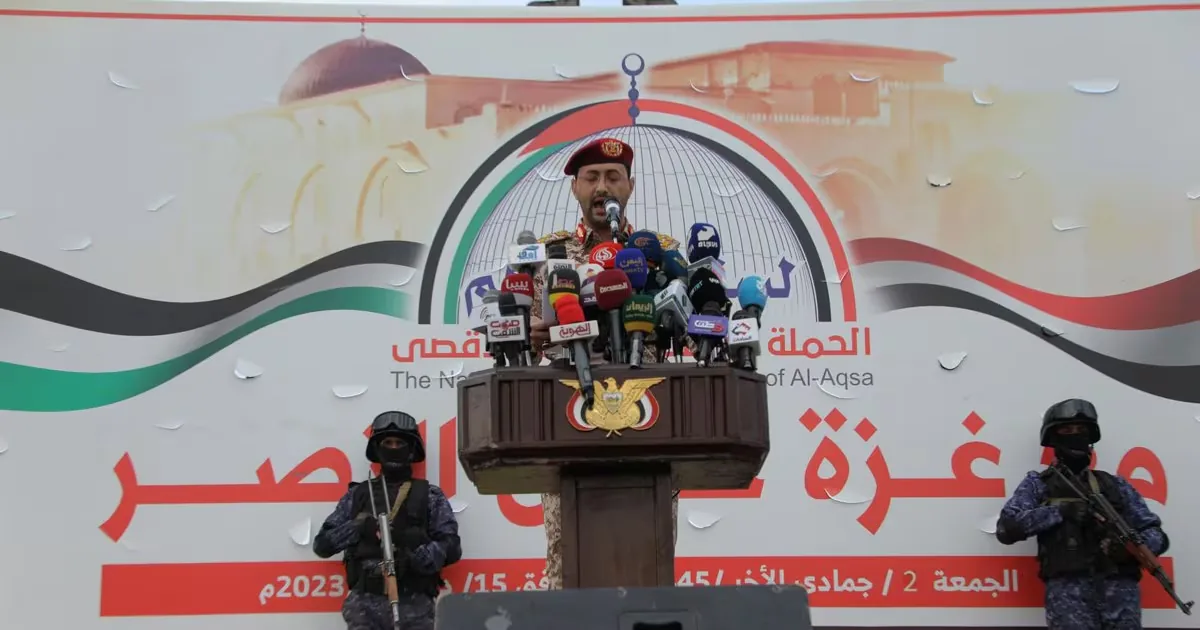
Tasnim added that Tehran and allied militant groups in the region have on their agenda the “total closure of the Strait of Hormuz and the activation of other fronts,” including the Bab al-Mandeb Strait at the southern end of the Red Sea, where Yemen’s Houthi rebels, backed by Iran, have launched attacks against vessels passing through the area.
Regarding this, CNN highlighted that the closure of the Bab al-Mandeb Strait could significantly disrupt global trade and further destabilize oil markets. This strategic maritime route is located at the southern end of the Red Sea and is a key gateway to the Suez Canal, connecting Europe and Asia through one of the world’s busiest shipping lanes. At just 29 kilometers wide at its narrowest point, it is where ships have previously been attacked by Yemen’s Houthi rebels, backed by Tehran.
At the end of 2023, Houthi militants began attacking merchant ships passing through the strait in retaliation for Israel’s war in Gaza. The attacks forced shipping companies to use longer routes, adding weeks to voyages and causing higher expenses for fuel, insurance, and sailors’ wages.
Almost 15% of global maritime trade passes through Bab al-Mandeb. Previous disruptions in maritime transport between 2023 and 2025 likely cost about 20 billion dollars annually, according to industry estimates. However, the strait has remained largely navigable during the current war, preserving a crucial export route for Saudi Arabia, the world’s largest crude exporter, after Iran effectively closed the Strait of Hormuz.
President Donald Trump stated on Monday that Iran has not yet informed the United States about the suspension of talks but suggested he would have no problem waiting for Tehran to accept an acceptable agreement. “I think we have talked too much, to be honest. I think silence would be very good,” he told NBC News in a phone interview. He assured that “nothing happens” if Iran suspends talks for a ceasefire.
He added that this does not mean the United States will resume large-scale military operations. “It does not mean we are going to start dropping bombs everywhere,” he told NBC. “We will simply remain silent. We will maintain the blockade. The blockade is unbreakable.”
That same Monday, the United Kingdom Maritime Trade Operations Center (UKMTO), which monitors incidents worldwide, reported that a cargo ship was hit by an unknown projectile off the coast of Iraq, a few kilometers from the port of Umm Qasr in the Persian Gulf. “The UKMTO is unaware of any environmental impact at this time. Authorities are investigating,” it indicated.
Meanwhile, the United States Army announced on Monday the interception of two ballistic missiles launched by Iran against one of its bases in Kuwait, amid what Tehran described as a response to the latest U.S. bombings against the country, despite the ceasefire agreed in April and ongoing negotiations to try to reach a peace agreement.
“The United States Central Command (CENTCOM) remains vigilant and will continue to protect our forces against Iranian aggression while supporting the ceasefire in effect,” it emphasized in a brief statement published on social media.
Previously, the U.S. Army had claimed attacks against “Iranian drone radars and command and control stations” over the weekend in the town of Geruk and on Qeshm Island, located on the eastern and western sides, respectively, of the Strait of Hormuz, in response to Iran shooting down a U.S. drone.
Amid this confusing scenario, Brent crude, the global oil benchmark, rose 6% and was trading at $97.02 per barrel shortly before 10:00 a.m. (Eastern Time). West Texas Intermediate (WTI), the U.S. benchmark, rose about 7.5% to $93.93 per barrel for July delivery.
These latest moves, CNN highlighted, come after hopes of a deal between the United States and Iran caused a 19.3% drop in Brent crude in May, its largest monthly decline since March 2020, when pandemic lockdowns began, according to Deutsche Bank analysts.
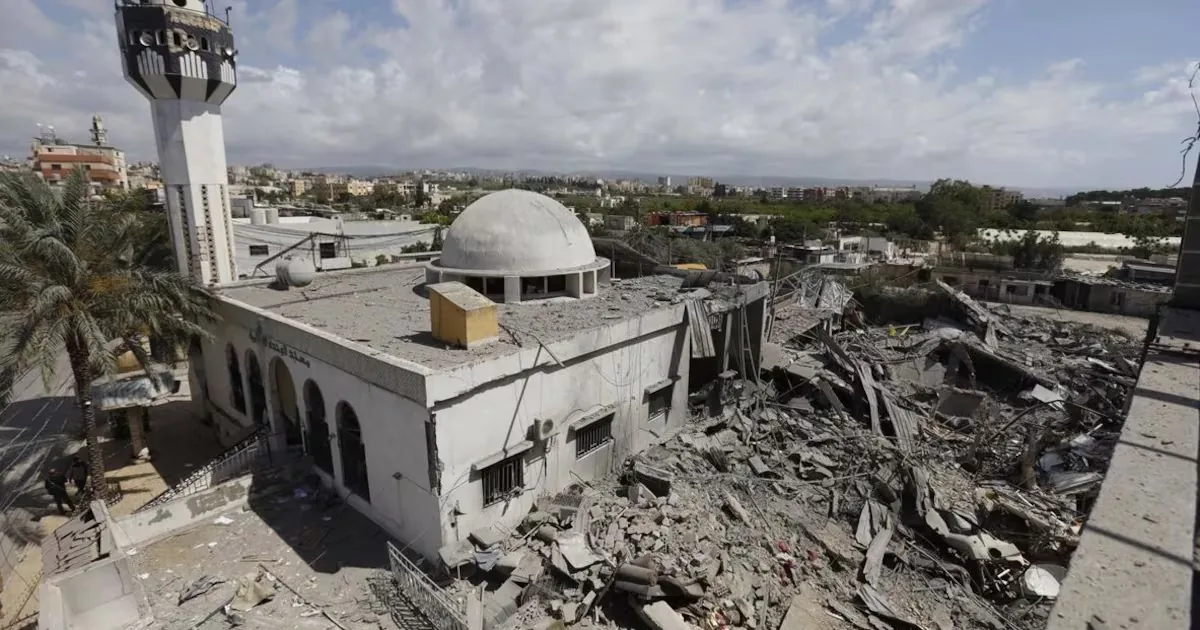
During the same day, Israeli Prime Minister Benjamin Netanyahu ordered the Israeli Army to attack the Dahieh district in Beirut, a southern suburb of the city that is a Hezbollah stronghold. An Israeli official told CNN that plans to attack Beirut were coordinated with the United States.
“The Israel Defense Forces warn residents of the Dahieh area of Beirut—in reference to the southern suburbs of the Lebanese capital, where Hezbollah has presence and support—and urge them to evacuate to preserve their safety,” posted the Israeli Armed Forces spokesperson in Arabic, Avichai Adrai, on social media.
Netanyahu assured in a social media message that he had ordered “attacks on terrorist targets in the Dahieh neighborhood” in what he described as a response to “repeated ceasefire violations by the terrorist organization Hezbollah and attacks against cities and citizens” in Israel.
Meanwhile, Israeli Defense Minister Israel Katz reiterated that “if there is no peace in the north (of Israel), there will be no peace in Beirut.” “We will not allow a reality that harms our communities and citizens while peace is maintained in Beirut,” he threatened.
Netanyahu’s and Katz’s messages were published shortly after the Israeli Army confirmed the death of another soldier in a drone attack carried out by Hezbollah against a group of soldiers near Beaufort Castle, taken by Israeli troops on Sunday as part of the new invasion of Lebanese territory unleashed in March.
The latest large-scale hostilities broke out on March 2, when Hezbollah launched projectiles against Israel in response to the assassination of Iran’s supreme leader, Ayatollah Ali Khamenei, in the offensive launched on February 28 by Israel and the United States against the Islamic Republic.
The parties had agreed to a ceasefire in November 2024 after 13 months of fighting following the attacks of October 7, 2023, although since then Israel continued frequent bombings against the country and maintained military presence at several points, arguing it was acting against Hezbollah, amid accusations from Beirut and the group about these actions.
The Israel Defense Forces (IDF) briefly suspended attacks against Lebanon after agreeing to a ceasefire on April 16. However, they soon resumed attacks against Hezbollah targets, claiming these were “defensive operations” allowed by the truce negotiated by the United States.
The number of attacks has increased in recent weeks, CNN reports. In the week ending May 31, the IDF carried out 514 waves of airstrikes in Lebanon, according to the Alma Research and Education Center, an independent nonprofit organization specializing in security challenges on Israel’s northern border. This continued the upward trend from the previous week’s 328 waves of attacks, a 57% increase.
The number of Hezbollah attacks against Israel and IDF forces has also increased. In the week ending May 31, the Lebanese militia carried out 227 waves of attacks against Israel and IDF forces, according to Alma Research. This represents a 41% increase compared to the previous week.
At least 3,433 people have died and 10,395 have been injured in Israeli attacks against Lebanon since March 2, the Lebanese Ministry of Health reported on Monday. Their figures do not distinguish between combatants and civilians. Of that total, at least 21 died in the last 24 hours. More than 1.2 million people have been displaced.
Israel states that 24 of its soldiers and four Israeli civilians have died during the same period on both sides of the border.
As Israel intensified its attacks in Lebanon in recent days, several Middle Eastern and European countries condemned the military action, advocating diplomacy and an end to the bloodshed.
Saudi Arabia’s Ministry of Foreign Affairs condemned on Monday what it called “Israeli aggression” against Lebanon and rejected the “attack” on Lebanese sovereignty. It urged the international community to “assume its responsibility to stop this aggression and end Israeli military movements seeking to expand” in Lebanon.
“We call on Israel to stop its military escalation in Lebanon and to respect Lebanon’s sovereignty and territorial integrity,” said the spokesperson for the European External Action Service, Anouar El Anouni, during the European Commission’s daily press conference.
In a statement issued on Monday, Turkey’s Ministry of Foreign Affairs said it “strongly condemns the increasing Israeli occupation of Lebanon” and urged the international community to “take immediate and concrete measures to end Israeli attacks and occupation.”
That same Monday, before Iranian media reported on the suspension of talks between Iran and the United States, Lebanese President Joseph Aoun stated that Israel has “continued its military operations and bombing of villages under the pretext of legitimate defense.” He added that Lebanon is committed to diplomacy: “The problem will not be solved immediately; it is a process that takes time, and we have no other option.”
In that sense, Aoun defended on Monday maintaining negotiations with Israel despite the new offensive launched by the Israeli Army, with new bombings and territorial advances north of the Litani River, insisting that although there are “obstacles,” the talks are “progressing.”
“Negotiations may encounter obstacles or be delayed in reaching our goal, but they are progressing. All matters are resolved through negotiation, no matter how long it takes. War will bring no benefit to any of the parties involved,” the leader said after a political meeting in Lebanon, according to the Lebanese Presidency. Aoun insisted that having talks, facilitated by Washington and which agreed on a ceasefire that in practice has not been maintained, is the “safest” option and “does not imply surrender or concession.”
However, Iran’s central military command, Hatam al Anbiya, warned on Monday that residents of northern Israel will have to evacuate the area if the Israeli Armed Forces resume bombings over southern Beirut.
“Given the repeated violations of the regime’s (Israeli) ceasefire, if this threat materializes, we warn residents and military settlements in the northern occupied territories to leave the area if they do not want to be harmed,” the military body said in a statement reported by Iranian public radio and television, IRIB.
On the other hand, the intelligence services of the Iranian Revolutionary Guard published a statement warning that “those who sow winds will reap storms.” “Iran considers crossing red lines in Lebanon and Gaza as a direct war and imposing a cost on its national security and Islamic resistance and will retaliate with defensive operations involving disruptive measures and opening new fronts, as well as preserving the situation of the Strait of Hormuz,” they threatened.
The head of the Intelligence of the Iranian Revolutionary Guard Navy, Behnam Rezaei, pointed in the same direction that “Iran’s patience has a limit.” “The Strait of Hormuz is under Iranian control. We will not allow the naval blockade to continue nor tolerate the escalation of tension in Lebanon. The patience of the Armed Forces of the Islamic Republic of Iran has a limit,” he stressed.