








Japan has declared that it recognizes the need to better counter foreign intelligence after The New York Times reported that Russia had turned the country into a “spy den” and a key source of components for weapons.
The newspaper, in an investigation published on Sunday, reported that, thanks to “weak espionage laws,” Moscow was using Japan as a hub for intelligence gathering and the acquisition of dual-use technology needed for its war in Ukraine.
Long considered a country vulnerable to international intelligence agents, Japan experienced an influx of Russian spies after the invasion of Ukraine led to its expulsion from Western countries.
In August 2022, Nikkei Business reported that about 120 Russian intelligence agents were operating in Japan. This came after a police warning about their approaches to employees of technology companies.
According to sources cited by Nikkei and Jiji Press, one of the senior positions in the Russian trade representation in Tokyo is always held by an SVR officer, the successor to the KGB’s overseas division.
In January, the Tokyo Metropolitan Police Public Security Bureau reported that an employee of a Japanese machine tool company had been revealing trade secrets to a suspected SVR agent who had already left Japan.
“We recognize that, in a rapidly changing security environment, there is a growing need to counter foreign intelligence activities, such as the acquisition of critical information, which threaten Japan’s national security,” said government chief spokesman Minoru Kihara on Monday.
Kihara, who declined to comment directly on the American newspaper report, told reporters that Tokyo “must address this issue with even greater rigor.”
The spokesman added that the Japanese Parliament approved a law this year that paves the way for the creation of a new national body to coordinate its fragmented intelligence activities.
The New York Times report cited estimates from the Ukrainian government that 90% of Russian missiles and drones contain Japanese components.
According to the statement, Russia’s operations in Japan were being led by Maksim Vladimirovich Filchenkov, a Russian intelligence agent working undercover at the Tokyo office of the Russian airline Aeroflot.
Due to restrictions on direct exports to Russia, supply networks use intermediary companies and third countries such as Vietnam, Uzbekistan, and Sri Lanka to transport components to Russia, the report adds.
Read more United States announces a new wave of attacks against Iran
According to The Guardian newspaper, one of the reasons there are so many spies in Japan lies “in the trauma of the brutal repression of dissent before and during World War II.”
The postwar Constitution enshrines the privacy of communications and freedom of expression, which, along with a civil society consensus, has severely restricted officially authorized surveillance, the British newspaper indicated.
This has left Japan without espionage laws beyond those applicable to military personnel and contractors. After a series of embarrassing cases in which convicted spies received light sentences, a 1985 attempt to introduce an espionage law that included the death penalty as a possible punishment failed amid strong opposition.
The Act on Specially Designated Secrets also faced opposition but was passed by the Diet—the Japanese Parliament—in 2013. Its harshest measure was a 10-year prison sentence for leaking state secrets. The January case, in which a Russian agent cultivated a relationship with a machine tool engineer, highlighted its shortcomings when the police referred it to prosecutors as a case of unfair competition.
The reports emerged at a time when Tokyo is carrying out the biggest overhaul of its security services since the postwar period.
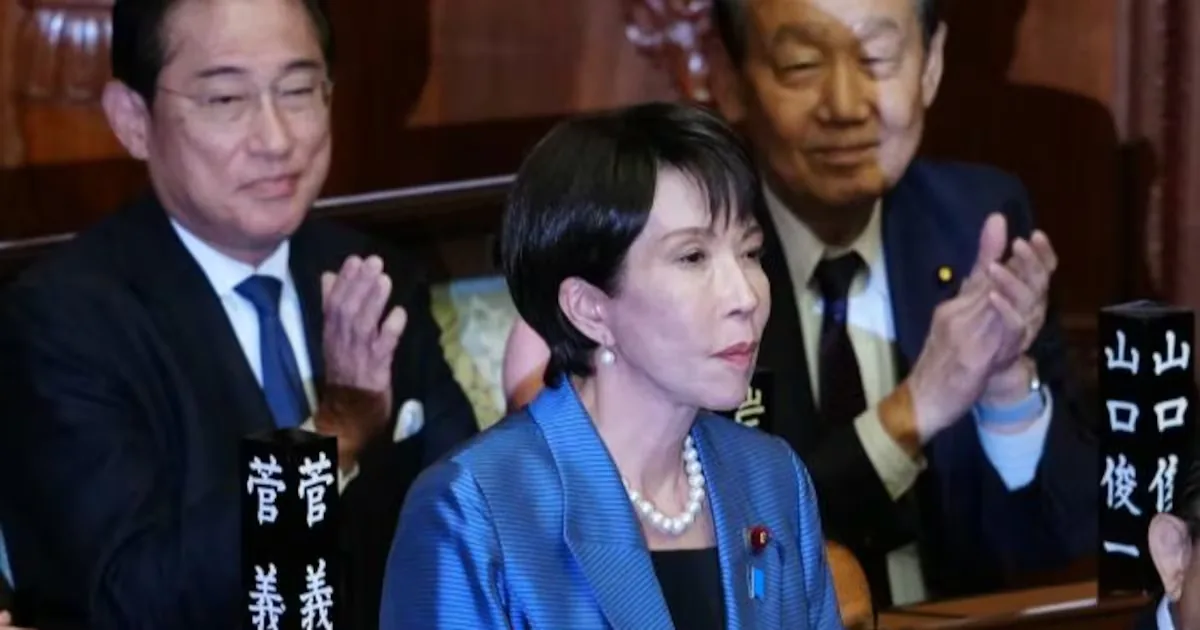
Sanae Takaichi’s government is using its broad parliamentary majority, and the recognition that Japan now faces real geopolitical threats, to push through the first significant reform of postwar intelligence services.
The National Intelligence Council Creation Act, passed in May, establishes a council chaired by the prime minister and a National Intelligence Bureau (NIB) composed of 700 members that brings together operations that were previously separate.
The NIB is mandated to oversee counterintelligence operations, and new legislation targeting foreign agents in Japan is expected to be proposed by the end of 2026.
Japan’s Signals Intelligence Directorate (DFS) will share intelligence with the new office but will continue to operate independently.
Perhaps the most radical measure is the creation of a new foreign intelligence agency, equivalent to the CIA or MI6, which will begin operations in early 2028.