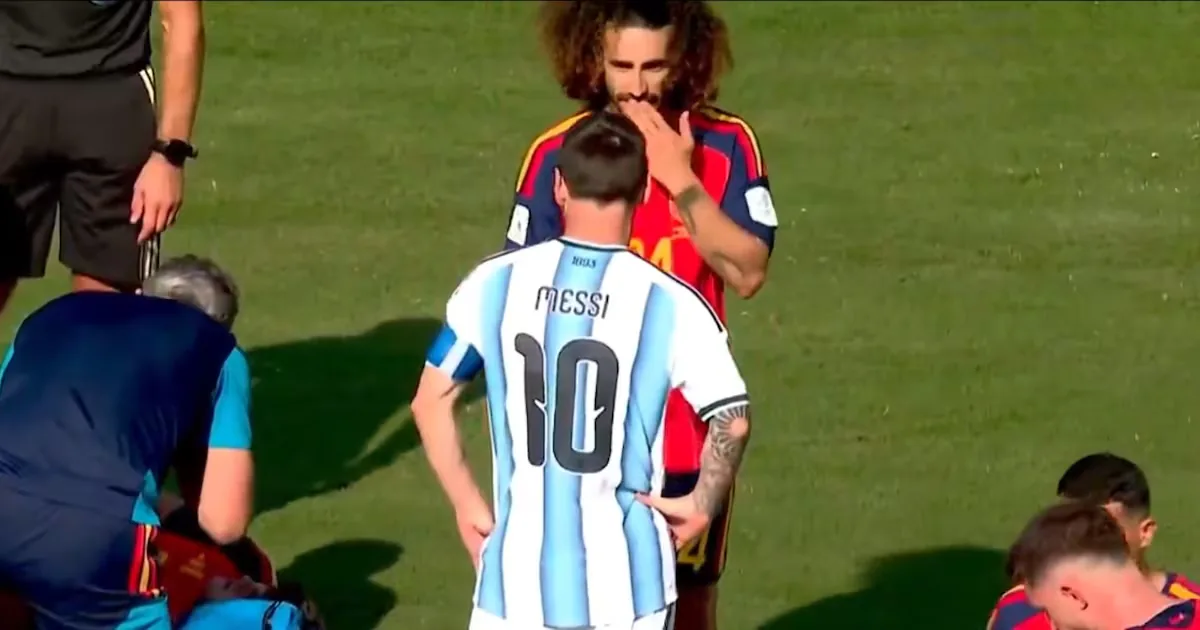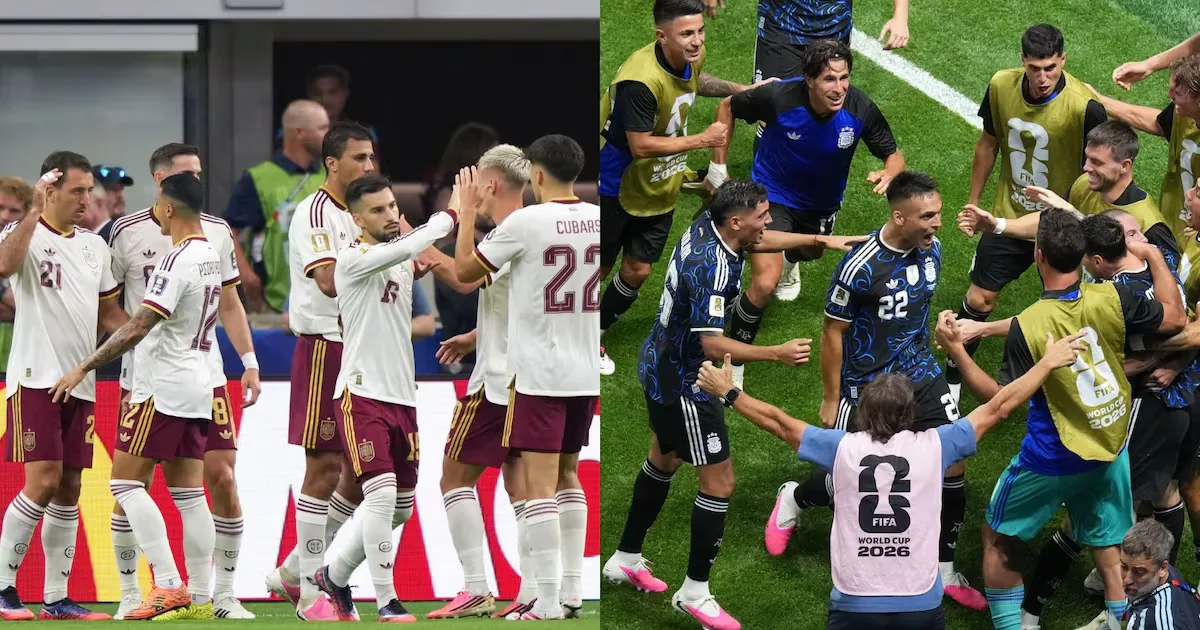


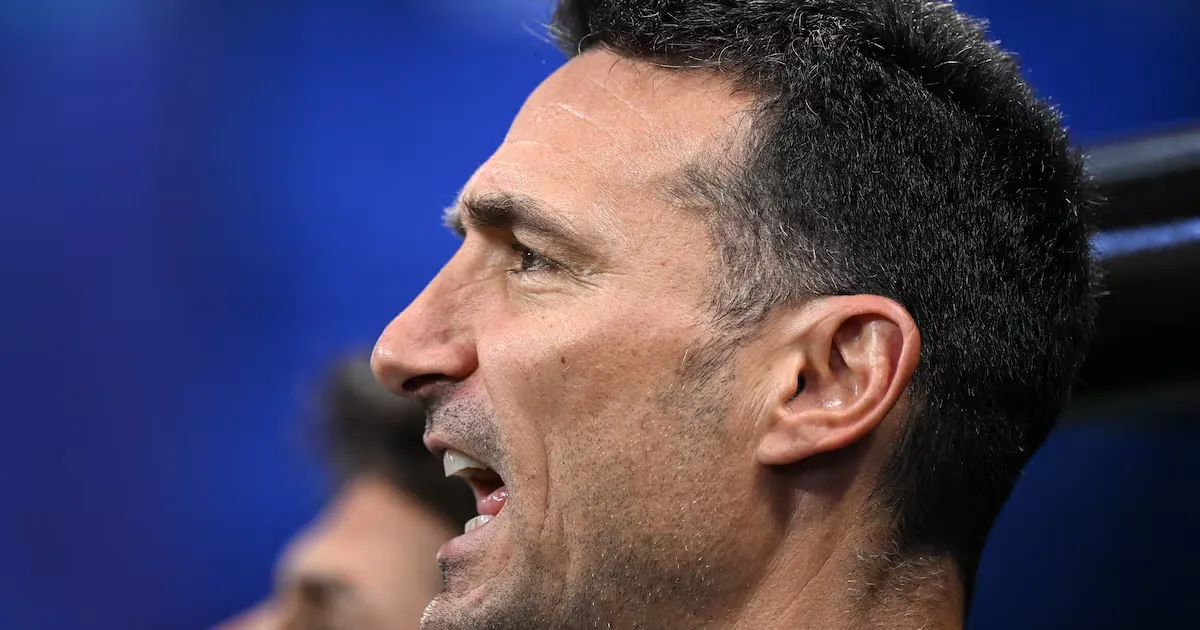
The 2026 World Cup, which concludes this Sunday, has featured coaches of 28 different nationalities. In this regard, Argentina predominated. Trans-Andean football has been characterized by exporting coaches to different latitudes, and this World Cup has been no exception. Six of the 48 participating teams have had an Argentine on the technical bench. Of them, the one who has gone furthest is Lionel Scaloni.
Read more Kimi Antonelli is making a strong comeback in Formula 1 and secures pole position for the Belgian GP
The former footballer, world champion in Qatar 2022, is now in a new final with the Albiceleste, aspiring to a back-to-back championship that has not happened in the biggest football event since Brazil achieved it in 1958 and 1962. The rest of his compatriots were eliminated as the tournament progressed. Néstor Lorenzo, in charge of Colombia, was eliminated in the round of 16, via penalties. In the same phase, Gustavo Alfaro, with Paraguay, was also eliminated. Although he caused an upset by eliminating Germany, he then could not beat France. Another eliminated in the round of 16 was Mauricio Pochettino, with the United States.
Sebastián Beccacece reached the round of 32 with Ecuador, after a miraculous qualification after defeating the Germans. After the World Cup participation, the former assistant to Jorge Sampaoli left his position with La Tri. The only Argentine coach who did not qualify for the knockout rounds was Marcelo Bielsa. In his third World Cup as a coach, he was eliminated prematurely with Uruguay.
Of the six Conmebol representatives in the tournament, only Argentina presented a local coach. Brazil’s situation was unprecedented. The CBF bet on Carlo Ancelotti to recover lost successes, however, it did not work out in this edition, being eliminated in the round of 16 at the hands of Norway. It was the Canarinha’s worst World Cup in 36 years. For the first time, the South American giant was not coached by a local in the World Cup. But Brazil’s situation goes further.
One of the factors that can explain the Scratch’s poor current form is related to its failure to produce coaches. The hard data is revealing: North America 2026 was the first World Cup in history without a Brazilian coach, in any of the participating teams. While 22 coaches managed their own country, 26 did so in foreign teams. One of them was Carletto. Italy, which did not qualify, had three coaches in the tournament. In addition to Ancelotti, the others were Vincenzo Montella, with Turkey, and Fabio Cannavaro, in Uzbekistan.
The podium of nationalities with the most presence on the benches has Argentina at the top, followed by France and Spain. These three countries had one of their own in the semifinals. The French contributed strategists for five teams, with the caveat that Tunisia had two in the middle of the tournament (Sabri Lamouchi and Hervé Renard). While the Spanish contributed with four coaches.
6 Argentina: Lionel Scaloni (Argentina, final); Néstor Lorenzo (Colombia, round of 16); Gustavo Alfaro (Paraguay, round of 16); Mauricio Pochettino (United States, round of 16); Sebastián Beccacece (Ecuador, round of 32); Marcelo Bielsa (Uruguay, group stage).
5 France: Didier Deschamps (France, semifinals); Rudi Garcia (Belgium, quarterfinals); Sebastien Desabre (DR Congo, round of 32); Sebastien Migné (Haiti, group stage); Herve Renard (Tunisia, group stage).
4 Spain: Luis De la Fuente (Spain, final); Roberto Martínez (Portugal, round of 16); Thomas Christiansen (Panama, group stage); Julen Lopetegui (Qatar, group stage).
3 Germany: Thomas Tuchel (England, semifinals); Julian Nagelsmann (Germany, round of 32); Ralf Rangnick (Austria, round of 32).
3 Italy: Carlo Ancelotti (Brazil, round of 16); Vincenzo Montella (Turkey, group stage); Fabio Cannavaro (Uzbekistan, group stage).
2 Switzerland: Murat Yakin (Switzerland, quarterfinals); Vladimir Petkovic (Algeria, round of 32).
2 Morocco: Mohamed Ouahbi (Morocco, quarterfinals); Jamal Sellami (Jordan, group stage).
2 Australia: Tony Popovic (Australia, round of 32); Graham Arnold (Iraq, group stage).
2 Netherlands: Ronald Koeman (Netherlands, round of 32); Dick Advocaat (Curaçao, group stage).
Read more Book review: from Mary Beard to Elisabeth de Waal
1 Norway: Stale Solbakken (Norway, quarterfinals).
1 United States: Jesse Marsch (Canada, round of 16).
1 Mexico: Javier Aguirre (Mexico, round of 16).
1 Egypt: Hossam Hassan (Egypt, round of 16).
1 Bosnia: Sergej Barbarez (Bosnia and Herzegovina, round of 32).
1 Cape Verde: Bubista (Cape Verde, round of 32).
1 Ivory Coast: Emerse Faé (Ivory Coast, round of 32).
1 Croatia: Zlatko Dalic (Croatia, round of 32).
1 Portugal: Carlos Queiroz (Ghana, round of 32).
1 Senegal: Pape Thiaw (Senegal, round of 32).
1 Belgium: Hugo Broos (South Africa, round of 32).
1 England: Graham Potter (Sweden, round of 32).
1 Japan: Hajime Moriyasu (Japan, round of 32).
1 Czech Republic: Miroslav Koubek (Czech Republic, group stage).
1 Iran: Amir Ghalehnoy (Iran, group stage).
1 South Korea: Hong Myung-bo (South Korea, group stage).
1 New Zealand: Darren Bazeley (New Zealand, group stage).
1 Greece: Georgios Donis (Saudi Arabia, group stage).
1 Scotland: Steve Clarke (Scotland, group stage).