






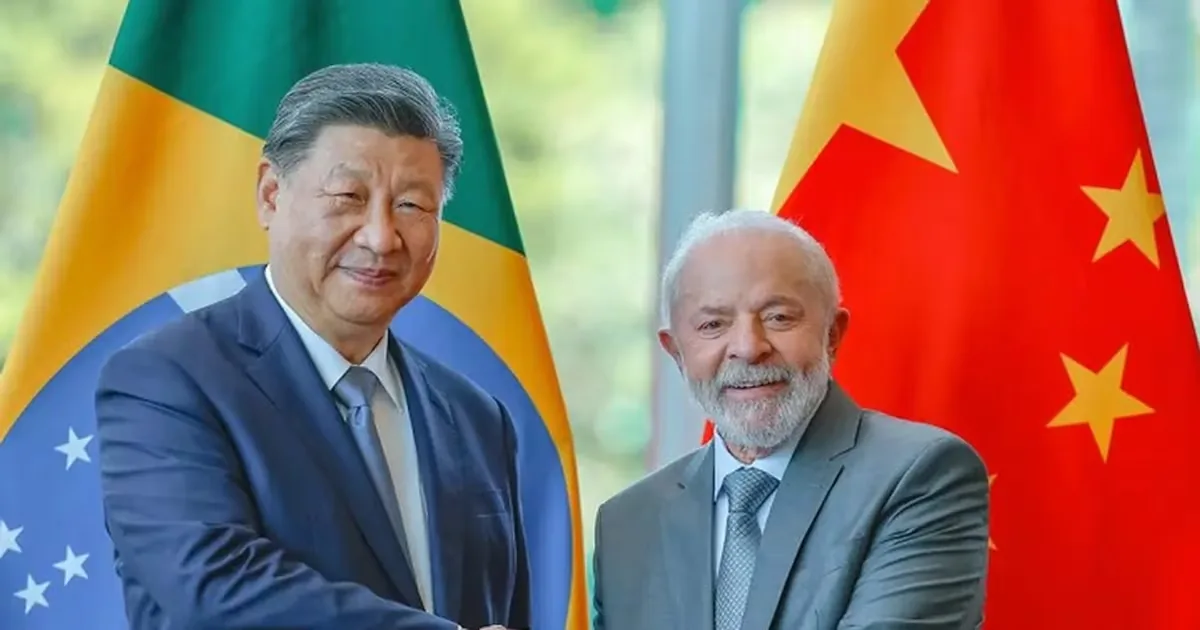
The presidents of Brazil, Luiz Inácio Lula da Silva, and China, Xi Jinping, have held a telephone conversation in recent hours in which they talked about the importance of strengthening the relationship between both countries, days after the United States confirmed 25% tariffs on Brazilian exports.
Lula conveyed to Xi Brazil’s commitment to “diversify markets and trading partners”, in line with statements from a few days ago in which he seemed to downplay the US rates.
“We are not going to cry over what we could not sell to them because we will look for other buyers,” he said.
In the note, Lula highlighted the “good results” thanks to bilateral trade and the exemption of short-term visas, which “will expand the flow of tourists and business opportunities,” as well as emphasizing the need to expand cooperation in other fields and advance an agreement with Mercosur.
“We have reiterated the shared purpose of expanding cooperation in strategic and high-tech areas, such as artificial intelligence, satellites, critical mineral processing, and fertilizer trade,” the Brazilian president communicated in a message on his social networks.
On the international level, both countries emphasized multilateralism as a way to face and try to solve the “proliferation of conflicts around the world”, at a time when the “incapacity” of the United Nations Security Council to respond to these crises is increasingly evident.
This increase in conflicts has its greatest impacts on global food and energy security, as well as causing “serious human and material losses,” reads a note, which highlights the “particularly challenging” outlook that the next UN Secretary-General will face.
Likewise, they have advocated for free navigation in the Straits of Hormuz and Bab al-Mandeb, in the context of the war in the Middle East that the United States is waging against Iran; and they have highlighted the dire humanitarian situation in the Gaza Strip, as Israeli bombings continue.
Precisely, in the face of these “new challenges” and circumstances, President Xi has emphasized that Beijing and Brasilia, “as important members of the global south, must firmly position themselves on the right side of history and progress,” according to the statement released by the Chinese government.
It is about “playing a more constructive role in the reform and improvement of the global governance system, as well as in defending international equity and justice” and, for this, they count on the BRICS as a mechanism to promote these new dynamics of cooperation, Beijing explained.
Read more Iran defends Saudi Arabia’s «right» to use nuclear energy after agreement with United States