








NASA lifts evacuation alert on the International Space Station after an air leak in the Russian module.
Read more Key aspects of the seven-day apostolic visit that Pope Leo XIV begins tomorrow to Spain
The order had been issued for part of the International Space Station (ISS) crew, after an air leak detected in the Russian Zvezda module raised concerns among mission control teams.
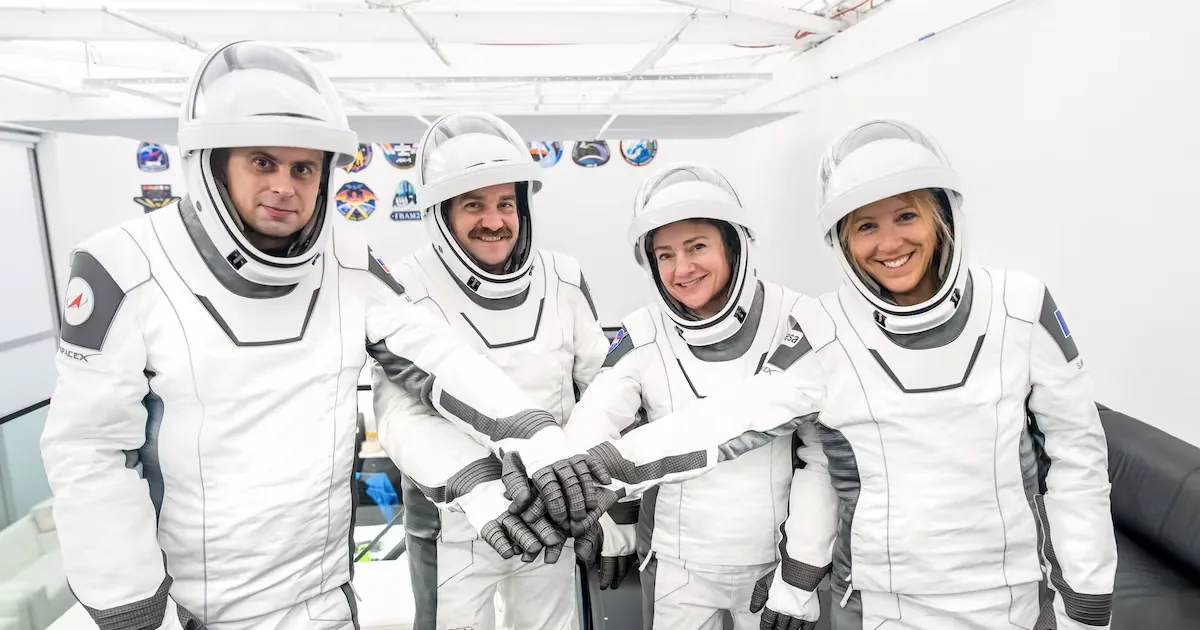
Five astronauts remained for approximately two hours inside a SpaceX Crew Dragon spacecraft docked to the station, ready for a potential emergency exit. The measure was adopted as a precaution while Russian specialists carried out work to locate and repair the source of the leak.
The alert was canceled once the Russian space agency Roscosmos suspended the repair tasks planned for the day and both agencies agreed to continue analyzing the data before taking new measures.
“We look forward to continuing to work with Roscosmos in a collaborative approach to address the leaks,” said NASA spokeswoman Bethany Stevens.
This is a persistent leak. The incident occurred after the rate of air loss on the station increased significantly. According to NASA officials, the leak went from about half a kilogram daily to approximately one kilogram per day, which increased concern about the integrity of the affected module.
The leaks are located in the Zvezda service module and the PrK transfer tunnel, a fundamental structure of the Russian segment of the station. This problem is not new: cracks and small pressure losses have been detected in that area for years, the exact cause of which remains a subject of debate between NASA and Roscosmos.
The Russian space agency reported that its specialists identified two leak points. One of them was quickly sealed, while additional work was being prepared to contain the second. Roscosmos assured that at no time was there an immediate threat to the crew or to the essential systems of the station.
Read more NASA isolates its astronauts from the International Space Station while Russian agency repairs leaks
The decision to order the temporary shelter was related not only to the increase in the leak, but also to discrepancies over the repair method.
According to US officials, two Russian cosmonauts planned to open a section of the affected area to try to directly access the crack. NASA officials expressed reservations about that procedure and, given the uncertainty, ordered the astronauts to move to the Dragon capsule as a preventive measure.
Once repair work was suspended, the US agency authorized the return of the crew to their usual activities within the orbital laboratory.
Currently, the ISS houses seven occupants. Among them are the members of the Crew-12 mission: US astronauts Jessica Meir and Jack Hathaway, French European Space Agency astronaut Sophie Adenot and Russian cosmonaut Andrey Fedyaev. Also part of the crew are US astronaut Christopher Williams and cosmonauts Sergey Kud-Sverchkov and Sergei Mikayev.
Shelter-in-place or evacuation preparation orders are rare in the history of the space station. Although similar protocols have occasionally been activated due to the risk of collision with space debris or variations in internal pressure, astronauts have never had to permanently abandon the ISS in the 27 years of continuous operation of the orbital complex.
The Zvezda module, incorporated into the station in 2000 as the main Russian contribution to the project, performs essential functions for life and operations on board, including life support systems, flight control, power distribution, and docking ports for Soyuz and Progress spacecraft.
The leak once again highlights the maintenance challenges faced by an infrastructure that has been operating since the late 1990s. NASA plans to keep the station in service until the end of 2030, before initiating a controlled deorbiting process planned for 2031, while promoting the development of future commercial platforms in low Earth orbit.
Read more 10 years after the black seals: are we learning to eat better?