








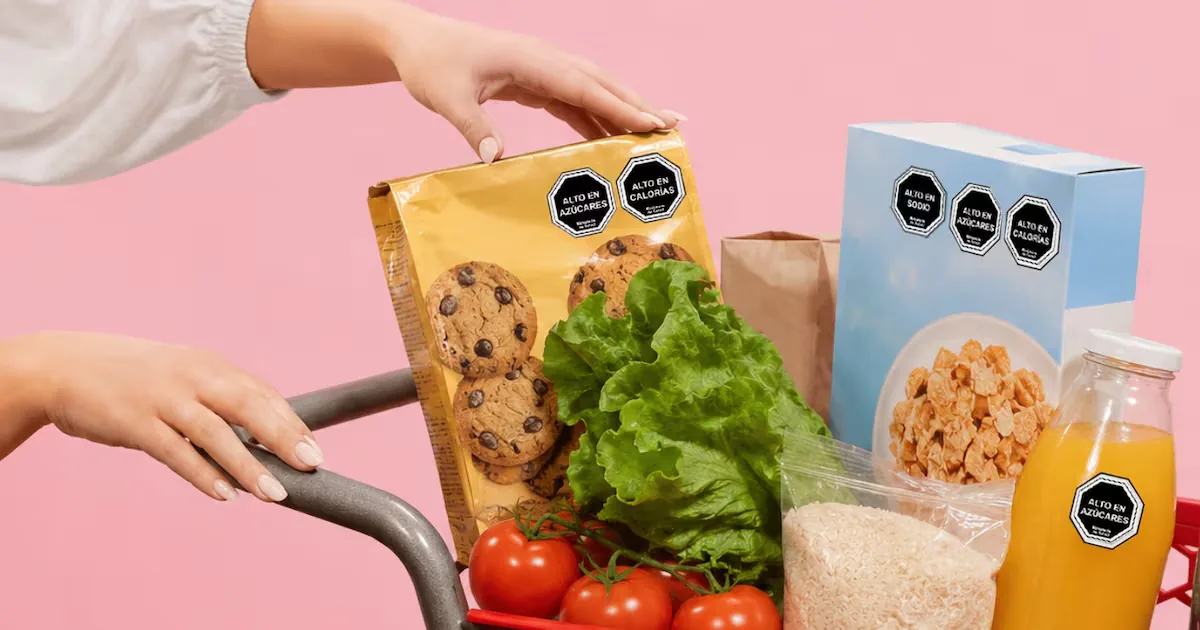
When the Food Labeling Law was enacted in Chile in 2012, I was in my first year of Nutrition. With the little knowledge I had then, it seemed like a completely revolutionary policy. And, to some extent, it was.
Read more Carcuro, school uniforms and the Revolt: Los Tres in five memorable shows
Although its implementation began gradually in 2016, the law not only introduced the well-known black warning labels. It also restricted advertising aimed at children, prohibited the sale and promotion of certain products in educational establishments, regulated how many foods could be promoted to the child public, and removed characters from packaging intended for minors.
I perfectly remember something that bothered me a lot at the time. When it was announced that Santa Claus could no longer appear on Christmas chocolates or that the Easter Bunny would disappear from certain products, I felt that something more than the food itself was being intervened. There was something about those celebrations and my own childhood that also seemed to be left behind.
I had wanted to write about this topic for a long time, but never from a simplistic perspective. Only now, a decade after the implementation of this law, do we have enough distance to observe it with greater perspective. Not to dictate whether it was a success or a failure, but to analyze its effects, recognize its limits, and open questions that still remain unanswered.
There are studies that show changes in purchasing decisions, greater attention to nutritional information, and even reformulations by the food industry. The message was simple and easy to understand: the more labels a product has, the less healthy it seems to be.
But the question that interests me is another: is this really helping people to be healthier?
So far, the evidence has not conclusively shown that the labels, by themselves, have managed to transform the complex health problems they sought to address. And it makes sense. Food is determined by multiple factors that go far beyond a warning printed on a package: economic access, stress, culture, family environment, and, of course, mental health.
Many people continue to buy products with labels because they like them, because they are accessible, or simply because they are the foods they can afford. Meanwhile, some reformulations have replaced sugar with sweeteners or other ingredients difficult for most people to identify, opening new debates about what we really understand by healthier eating.
However, there is an aspect that is talked about much less and deserves more attention: the impact that this type of message can have on our relationship with food.
Read more Kim Jong-un reveals nuclear fuel plant and warns he will strengthen his deterrence arsenal
There is still little direct research on this topic. Even so, various scientific reviews and specialists have raised concerns about how certain simplified nutritional messages could influence the way people relate to food, especially those with a history of eating disorders or long histories of restrictive diets. Among the main concerns are food fear, guilt associated with the consumption of certain products, and the tendency to classify foods as “good” and “bad.”
Perhaps that’s why this topic causes me so much concern. Because these are situations I have been observing and hearing in consultation for years.
People with EDs (eating disorders), food anxiety, or a long history of dieting often get easily trapped in things like these. Some stop enjoying foods they like out of guilt. Others end up believing that healthy eating simply consists of avoiding products with more labels. Little by little, eating stops being guided by the body’s needs and becomes determined by the fear of making a mistake.
The complex thing is that this logic no longer appears only on social media or in diet culture. It has also been established in health consultations, advertising campaigns, and television commercials. Again and again, we hear that we should prefer products with fewer labels, as if the quality of a diet could be summarized in a single indicator.
But eating has never been that simple.
Eating is also influenced by culture, mental health, physical needs, access to food, life experiences, family context, and the pleasure of eating. Reducing it solely to a label is to ignore a good part of its complexity.
That’s why I believe this discussion needs more nuances. Because a public policy can be born with good intentions and, at the same time, generate effects that are worth critically examining.
Ten years later, perhaps the question is no longer just how much information the labels provide, but also what kind of relationship with food they are helping to build. And if, in some cases, that relationship can end up having costs for mental health.
Because if there’s one thing I’ve learned from accompanying people for years, it’s that eating with more fear rarely translates into eating better.
Read more Angelo Pierattini at the Nescafé de las Artes: an electric celebration of the miracle of life