



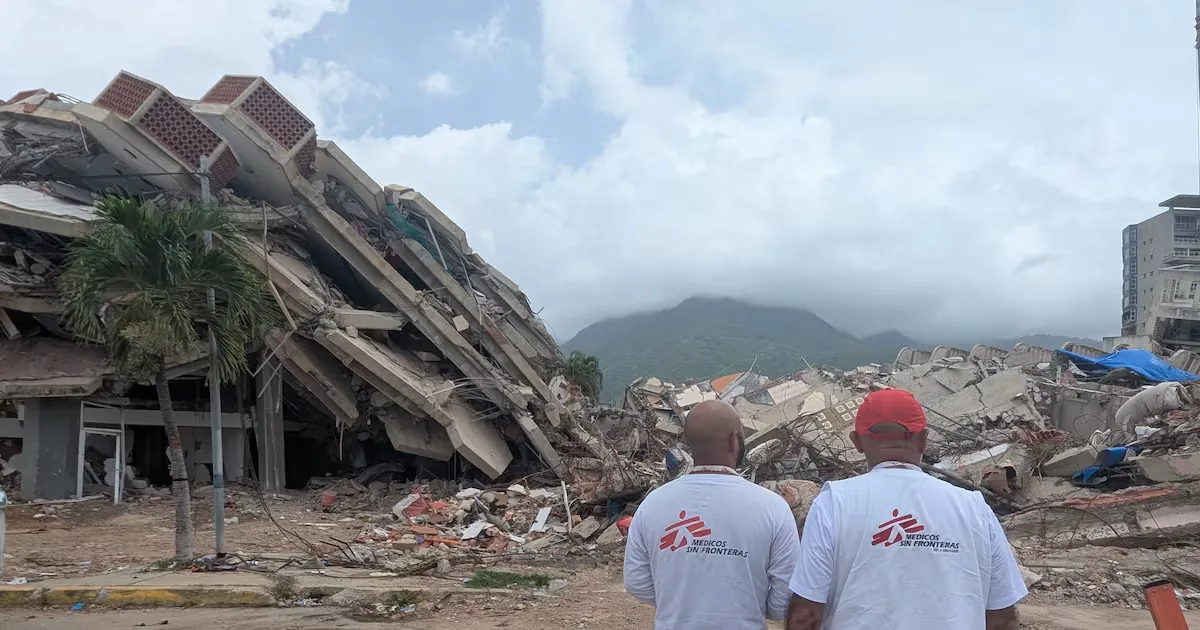
One month after the earthquakes in Venezuela, which especially affected the coastal state of La Guaira, near Caracas, the organization Doctors Without Borders (MSF) stated that the situation has transformed into a complex and prolonged crisis characterized by massive population displacement, severe infrastructure damage, and a profound psychological impact. The most urgent needs include access to drinking water, adequate shelter, mental health care, and protection.
Read more Paula’s Data: gorpcore, the trend that brings outdoor clothing to the city
The official death toll has reached 5,398, with 16,740 people injured, 17,907 displaced, and 6,462 rescued from the rubble. The organization noted that structural destruction is alarming: according to official information, 190 buildings have collapsed, while more than 895 structures, including schools, essential public infrastructure, and hospitals, have suffered severe damage and are at risk of collapse.
Thousands of people currently live in temporary settlements for internally displaced persons or sleep in tents next to their damaged homes. For example, in Maiquetía in La Guaira, approximately 3,000 people are camping on the sidewalk, in front of 20 severely damaged and unstable buildings. Similarly, on Bolívar Avenue in Caracas, another 3,000 people live on the streets, without adequate shelter or access to basic services.
In response to the crisis, MSF currently operates four mobile clinics providing primary health care, mental health care, health promotion, and water, sanitation, and hygiene activities in the most affected areas. For example, there are three centers in La Guaira (Maiquetía, Catia La Mar, and Tamaguarena) and one in Caracas (Bolívar Avenue).
In a statement, the organization noted that these clinics offer primary care, access to drinking water, and emergency mental health interventions for families who have lost everything. Over the past month, MSF medical teams have conducted 2,217 medical consultations.
“Many families continue to search for their loved ones under the rubble, and the impact of suddenly becoming homeless and displaced has led to a psychological crisis,” the international organization stated.
Read more Facebrooklyn presents new single with Mexican artist izatkm
To respond to these mental health needs, MSF has integrated this service into its response through mobile clinics and has provided 113 individual mental health consultations, 323 group therapy sessions, and 1,402 psychoeducation sessions.
With the local infrastructure severely affected, MSF teams are implementing water, sanitation, and hygiene interventions. For example, a 5,000-liter flexible water tank was installed in Playa Verde as a reliable source of drinking water.
Additionally, continuous chlorination of four main water distribution points was initiated, along with permanent monitoring of its quality. 5,000 emergency drinking water bottles were distributed to families living on the streets.
Over the past month, MSF has donated approximately 8.5 tons of emergency medical supplies, with which it has been able to respond to the health needs of approximately 10,000 patients. MSF teams continue to provide disinfectants and materials for infection prevention and control, not only to hospitals that are still functioning but also to overwhelmed local morgues, in order to ensure safety, hygiene, and dignity amidst unprecedented loss.
Read more Iran denounces a United States attack against the Navy headquarters in the north of the country