





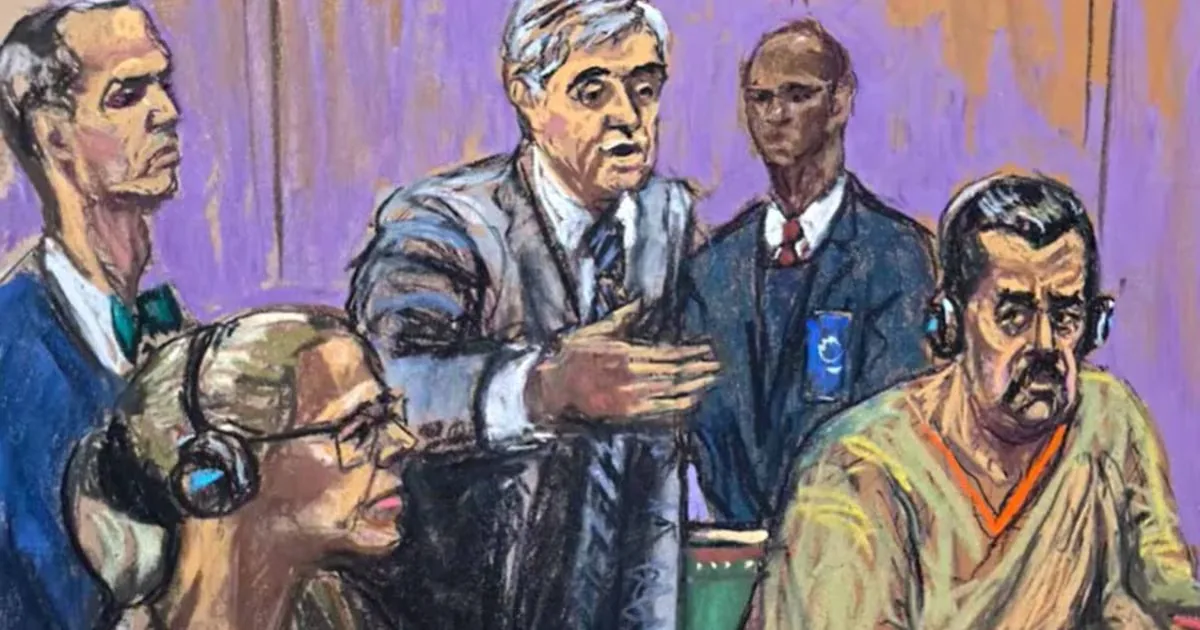
Federal judge Alvin Hellerstein set June 1, 2027, as the start date for the trial against Nicolás Maduro, 63, and his wife Cilia Flores, 69, in one of the most significant criminal cases in the United States in recent years.
The announcement was made after Maduro appeared this Wednesday, July 22, before the Manhattan federal court, dressed in a beige prison uniform and escorted by US marshals.
The hearing focused on the procedural calendar and the next steps in a case that could last several months, due to the complexity of the legal arguments raised by both parties.
The two defendants have been held in a Brooklyn prison since last January and have not requested bail.
The Manhattan federal prosecutor’s office accuses Maduro of four serious crimes, including conspiracy to narco-terrorism and conspiracy to import cocaine into the United States.
Prosecutors argue that the deposed Venezuelan leader used his position of power to facilitate the trafficking of large quantities of cocaine into US territory in coordination with actors linked to Venezuelan security forces and drug trafficking organizations.
Maduro and Flores reject the accusations. “I am innocent. I am a decent man, the constitutional president of my country,” Maduro emphasized during a previous court appearance.
If found guilty, both could face life sentences.
Maduro’s lawyers announced that they will file several motions to try to stop the process before it goes to trial.
Among the main arguments is the thesis that Maduro should enjoy judicial immunity for having served as the head of the Venezuelan State at the time of his capture. The defense also plans to question the legality of the US military operation that culminated in his arrest and transfer to New York.
Read more Flávio Bolsonaro emulates his father and gathers foreign diplomats to question the electoral system
Lawyer Barry Pollack has described that action as a “military kidnapping,” while Maduro has publicly defined himself as a “prisoner of war.”
Judge Hellerstein also scheduled a hearing for November 17 to analyze the defense’s initial motions. In addition, the parties anticipate a second round of appeals once the Prosecutor’s Office delivers classified material for review by the defendant’s lawyers.
Maduro and Flores were captured on January 3 during a night operation carried out by US forces in Caracas, an action ordered by President Donald Trump.
The US Administration has defended the intervention as a “surgical police operation” aimed at executing a criminal indictment filed years ago. Before the incursion, the Office of Legal Counsel of the Department of Justice concluded that the president could authorize the operation, considering it served a relevant national interest and did not require specific congressional authorization. This argument, however, has been widely rejected by Democratic lawmakers and international organizations.
Following the attacks in several Venezuelan localities, which resulted in the death of dozens of people, to capture Maduro, the UN Secretary-General, António Guterres, stressed that these actions constituted “a dangerous precedent.” And he called for “full respect, by all, for international law, including the Charter of the United Nations.”
The capture marked the end of Maduro’s government, who had been at the helm of Venezuela since 2013 and maintained a strong confrontational relationship with Washington for years.
After Maduro’s arrest, power in Venezuela fell into the hands of then-Vice President Delcy Rodríguez, now acting president, whose administration has promoted a rapprochement with the Donald Trump government.
In the months following the capture, the United States eased some sanctions related to the Venezuelan oil sector and allowed adjustments that facilitated, among other things, the payment of Maduro’s legal fees. In parallel, foreign companies expanded their investments in crude oil and gas projects in the Latin American country.
The evolution of these relationships develops in parallel with the progress of a judicial process that could become a precedent on the limits of immunity for former heads of state and the scope of US jurisdiction in cases of international drug trafficking.
Read more France investigates the death of Daniel Siad, alleged recruiter of women for Epstein