









In recent weeks, a group of conservative women in the United States sparked debate by suggesting they would be willing to give up individual voting in favor of the so-called “family vote”, that is, instead of each family member voting, only one person, the man, would vote on behalf of everyone. The proposal arose during the Women’s Leadership Summit, organized by Turning Point USA and led by Erika Kirk, and is part of a movement that advocates for traditional gender roles, promoting that women find their main fulfillment in marriage and motherhood.
And although the idea may seem extreme or marginal, the truth is it did not come out of nowhere. In recent years, the internet and social media have allowed conservative, anti-feminist communities and the so-called manosphere to connect with each other, amplify their messages, and build audiences that transcend national borders. Algorithms, the logic of virality, and the figure of influencers have contributed to these discourses, which previously circulated in limited spaces, now reaching millions of people and finding new ways to legitimize themselves.
At NGO Amaranta they have been observing this phenomenon for years. Since 2018, their work has focused on investigating how the internet and social media can become fertile ground for gender-based violence, but also on understanding how certain narratives manage to establish themselves, cross borders, and gain legitimacy in the digital space.
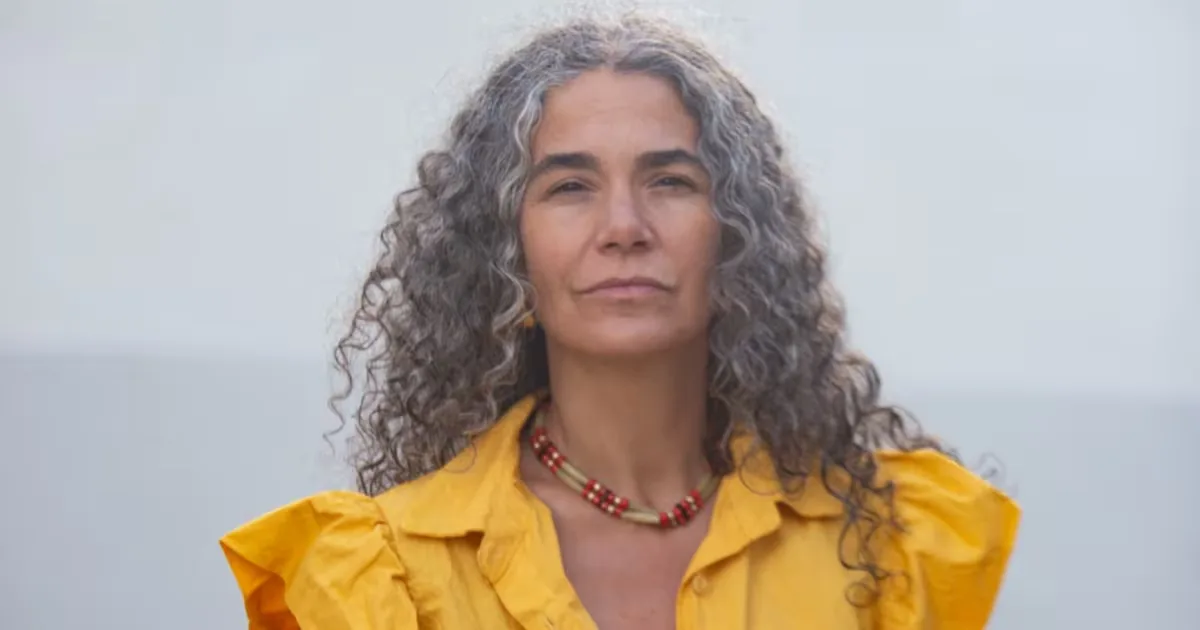
“What the internet allows is for these discourses to permeate different countries simultaneously and for alliances to be formed that take these issues to other places”, explains Karen Vergara, president of the NGO. “The fault is not with the internet. At its core, it is a vehicle under which movements that already existed before continue to be promoted, only now they find this space to go viral and expand more quickly. We are facing a regressive wave that seeks to establish itself in different places. What Erika Kirk is doing in the United States, for example, managed to gather nearly 2,000 women. It may not seem like a significant number, but the reach those discourses acquire through the internet ends up making a difference.”
According to Vergara, this reach is not measured only by the number of people who support them, but by the way digital platforms amplify certain content. “One fundamental thing to understand is that content that causes me indignation is usually content that will reach me and make me replicate it to more people,” she explains. In her view, the problem is no longer only political polarization, but also an affective polarization that makes it difficult to recognize the other as someone with whom it is possible to dialogue. “You see other people as adversaries, you don’t see common ground, and usually, these regressive movements appeal to that kind of social disconnection,” she points out.
That logic, she says, finds especially fertile ground in societies where the community fabric is weaker. “In a culture like the United States, which is very individualistic, these discourses have permeated precisely because of that. There is no social fabric that allows you to share with other communities in open or hate-free spaces, and that has ended up polarizing and strengthening these discourses.”
In that scenario, she adds, algorithms end up further enhancing the phenomenon. “The major platforms have a tremendous role. This polarization also occurs because of the way algorithms are currently designed, and that ends up spreading these discourses.” And she gives an example: “They gathered 2,000 women, not that many. But it has caused such a worldwide stir that the same stir ends up establishing that discourse as a valid position.”
The concept of the manosphere began to be used about seven or eight years ago to describe communities of men who, from different internet spaces, shared misogynistic discourses and promoted a regressive view of gender roles. Over time, however, it ceased to be a phenomenon exclusive to forums or closed groups. Today many of those ideas appear in videos about exercise, productivity, money, or relationships. They talk about discipline, success, and how to “be a real man.” It is precisely there where, according to specialists, part of its success lies. And more than a political stance, the manosphere began to sell itself as a lifestyle.
Valentina Luza, vice president of NGO Amaranta, believes that change has been key for these discourses to reach increasingly broad audiences. “These communities found leaders, podcasters, and influencers who began to have tremendous virality. On platforms like TikTok, they started presenting themselves as lifestyles. The fitness world is a good example. The idea is established that the man has to be a provider, strong, and impose his voice over the woman’s. What they do is reinforce stereotypes that, although they may seem harmless, over time stop staying only on the internet and begin to become a reality.”
– Up to this point, it might seem more or less obvious why these discourses find resonance among some men. The question is why are there also women who end up adhering to them?
Valentina Luza: I think it has a lot to do with the crisis we are experiencing. In scenarios of economic uncertainty, insecurity, or lack of certainties, these discourses offer something many people seek: order and a simple explanation of the world. They assign very clear roles, where the man is linked to the economic and the woman to care or beauty.
Many teenage girls and young women consume this content every day through the internet. They hear it over and over again and, little by little, it starts to make sense to them, especially when those ideas do not find a counterbalance in conversations within the family, school, or community. In the end, many seek security in discourses that end up limiting their own autonomy.
Karen Vergara: The search for social order in times of crisis often leads to these kinds of situations. When there is uncertainty, for example, due to job loss or economic instability, these more conservative discourses find space to reproduce. And they also begin to permeate among teenagers who see their parents constantly stressed. That is where the idea appears that perhaps the woman’s entry into the workforce was not the best decision and that we should return to traditional roles. But traditional roles are also work. Caring is also work.
– What consequences does it have when these discourses stop staying on the internet?
Valentina Luza: Concretely, the effect is the reduction of rights that seemed already won. It is no coincidence that many of these ideas aim to question the place of women in spaces of power. The most serious consequence is the relativization of violence and its normalization. At its core, we return to a status quo that we have tried to leave behind for a long time. The internet has become a space for amplifying all these violences, but also the collective imaginaries that sustain them.
If the internet has been a tool to expand these discourses, the interviewees agree that it can also become a space to question them. The answer, they say, is not to abandon social networks, but to inhabit them differently. “The first thing is to question these same algorithms and be very attentive to what we consume. Sometimes we do this scroll a bit automatically, and what we have to do is listen to colleagues, to thinkers who are making reflections in this regard and appropriate this internet space, which is also ours,” says Valentina.
Karen agrees. “The dispute for digital space is important. Regarding that, there has been talk of moving to networks and platforms that are kinder, that do not profit from algorithms, but I think something main is to open dialogue with our own community, listen to each other, among ourselves, and know how women in our environment are experiencing these kinds of situations, because we will probably find more cases of digital violence than we imagine.”
Also generate critical thinking. “We have to be very attentive to these discourses that tell us to be apolitical. That is a first step to losing power and rights that we had thanks to protest and the social movement. And be alert to these regressive discourses and bills, because many times what they seek is to keep us frightened and make us feel that we have no chance to reverse it, and that is not the case,” adds Karen.
And she concludes: “A term I really like is that of microsystemic changes, which, at its core, is everything I can do to change certain situations in my own community. In this case, colleagues who know more, for example, about digital violence, accompany those who know less; those who know less learn and transmit it to their own communities. This way we generate a virtuous network of support.”
Read more Zelenski appoints Rustem Umerov as the new head of Ukraine’s Foreign Intelligence Service