








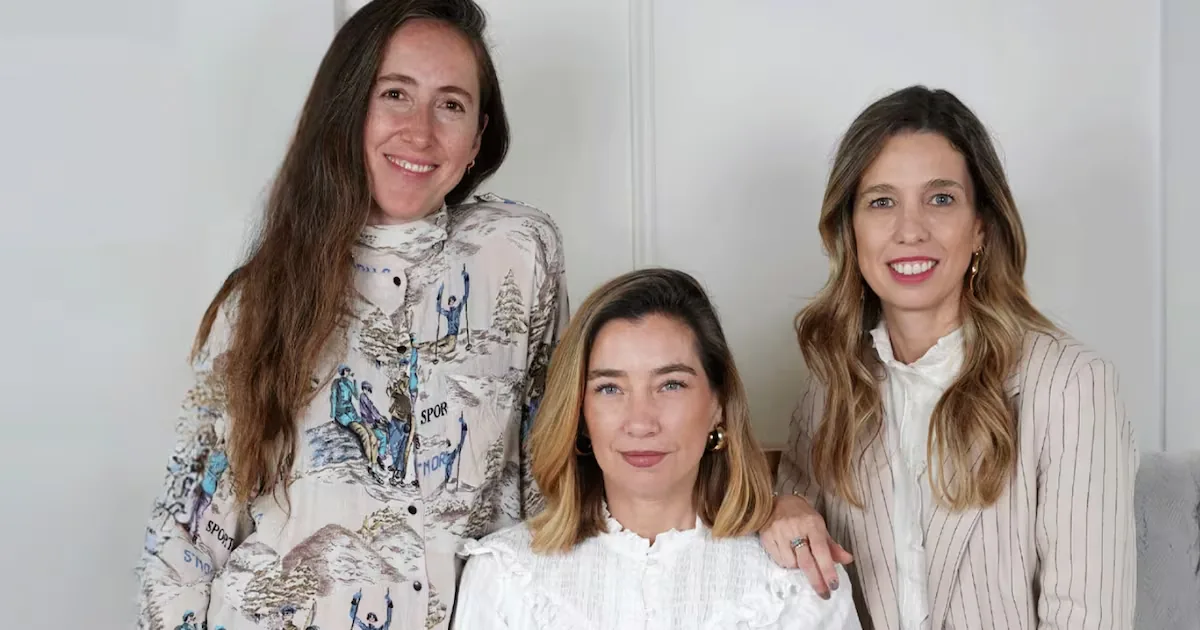
“Your baby is dead,” was the phrase Camila Santa Ana, a publicist and influencer, heard during a routine ultrasound when she was 13 weeks pregnant, in the middle of the pandemic. She still remembers the impact of those words, the coldness of the moment and the feeling that something inside her broke forever. “I felt like I was going to faint from grief and pain,” she recalls.
What came next was not only the mourning for that loss, but also the beginning of a long and painful journey marked by miscarriages, fertility treatments, confusing diagnoses, and a constant feeling of uncertainty.
Four years earlier, newly married and eager to start a family with her husband, Camila had decided to try for a pregnancy. Like many people, she thought it would be easy. “You think you will always be able to be a mom,” she says, but after that first loss came five more. In the process, she lost a fallopian tube, faced complicated pregnancies, and saw multiple doctors. “None of the gynecologists who treated me took the time to listen to me,” she assures. “It was an extremely painful and uncertain path. No one gave me a clear diagnosis and I felt like I didn’t understand anything.”
She finally decided to try assisted fertility. That’s when another stage began: in vitro fertilization treatments, hormone injections, invasive procedures, emotional exhaustion, and huge financial costs. “It’s a super intense and exhausting process, both financially and psychologically,” she says.
Over time, she found the doctor who, she says, changed her story. After multiple tests, they discovered that her body treated pregnancy as a threat due to various health factors and nutritional deficiencies resulting from a gastric sleeve surgery performed years earlier.
That’s how one day, the call she had been waiting for years arrived: “You have a healthy embryo, and it’s a little girl.” Camila gets emotional remembering it. After years of losses, treatments, and frustrations, she finally became a mother and today has two young daughters.
Alongside her process, something happened that also changed the way she understood infertility: she began sharing her experience on social media. It all started with a reel showing her injecting medication for one of her treatments. What she didn’t expect was the number of responses she would receive. “They were women who felt very alone,” she recalls.
Many wrote to ask what to do, how to face a negative test, or simply to tell her they were going through something similar in silence. Some even belonged to her own close circle and had never talked about the topic. That’s when she understood that infertility not only involved difficulties conceiving but also a deep feeling of isolation.
Along that path, she found refuge in digital support groups, where she met other women living similar experiences. Over time, the idea of doing something began to take shape. That’s how Colectivas was born, an initiative that seeks to bring together women undergoing fertility treatments or who have experienced infertility to share experiences, generate conversation, and build community from an intimate, safe, and deeply human place. “I want it to be a space to talk, hug, cry, feel supported, and stop feeling alone,” she explains.
Read more ¿Posuribisimo?: How Abelardo de la Espriella’s victory could mark a new stage for Colombian politics
Camila’s idea is to open a space where there is no need to explain too much. A place where those who arrive understand, from their own experience, what it means to wait for a result, get hopeful, get frustrated, start over, and emotionally sustain processes that are often lived in silence.
The first in-person meeting of Colectivas will take place next Saturday, June 6 at 9:30 a.m. in Las Condes, in a session specially designed so that attendees feel accompanied, heard, and supported.
During the event, Camila will share her four-year experience going through different infertility and assisted fertilization processes, as well as how the bond with other women living similar situations became a fundamental support in one of the most difficult moments of her life.
The session will also feature fertility specialist psychologist Paulina Nitsche and coach Marisol Casals, who will lead group dynamics aimed at emotionally addressing the different stages of infertility, providing coping tools, and fostering the creation of support networks among participants. “I didn’t want it to be just a gathering to talk. I wanted it to be a cared-for space, designed for them,” says its organizer.
More than a talk or a traditional workshop, Colectivas seeks to become a community experience and a safe space to speak without fear, feel validated, and remember that no woman should go through this path alone.
“My dream is that no woman in Chile has to live this process in silence. I know how hard it can be to go through infertility without a network to support you, and that’s why Colectivas is born from a very personal place. If this grows, we want to reach regions as well and support as many women as possible,” says Camila.
According to data from the World Health Organization, infertility affects 1 in 6 people of reproductive age at some point in their lives. Yet, it remains a deeply invisible experience, often marked by isolation, emotional exhaustion, and a lack of spaces for conversation and support. “Infertility is still a very silent topic. And when you live it, you feel like the world keeps moving while you are stuck,” says Camila. That’s why this initiative seeks to build community and provide support.
—
To participate in the first in-person Colectivas meeting you can write to the email colectivas.cl@gmail.com or directly on the initiative’s Instagram @colectivas.cl
Read more Def Leppard returns to Chile with Extreme as guest