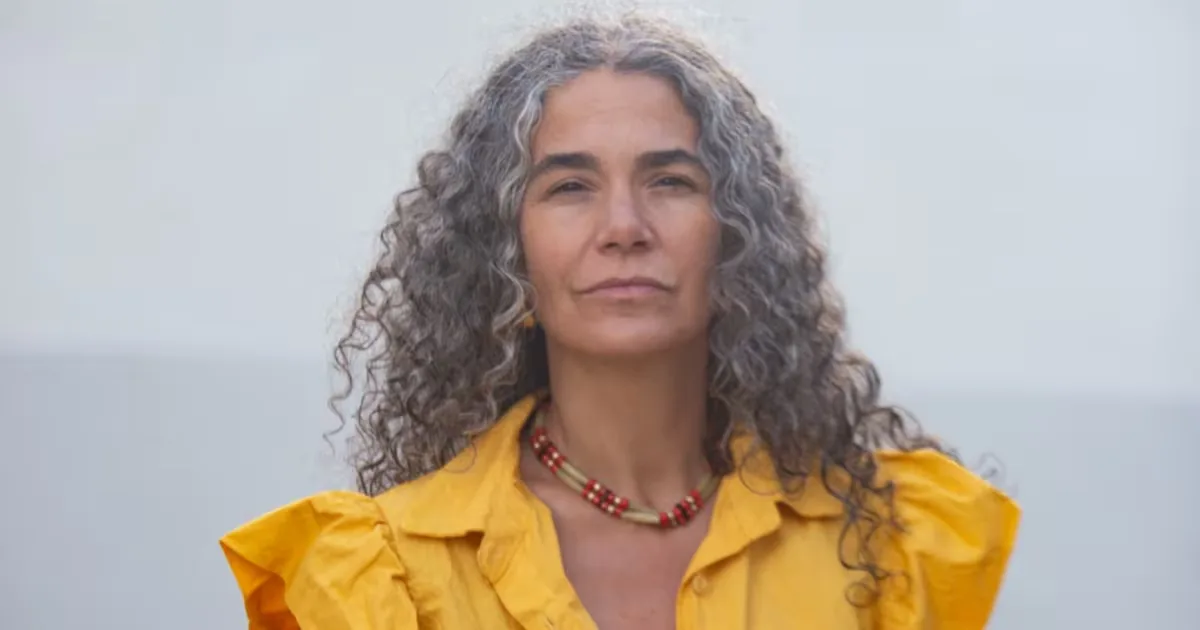






In her twenties, Jarka Paprnáková (44) arrived in Chile from Slovakia without speaking Spanish and with 500 dollars in her pocket. She had finished university, had been to the United States, and was coming to a country she knew very little about and to which she came for love. But after a while, that relationship ended and then she had to think about what to do. She didn’t take a plane back, but preferred to try her luck.
With part of those 500 dollars, she paid for two weeks at a Spanish school. When she realized the money wasn’t going to last long, she spoke with the owner. She told him she had studied administration and finance, that she spoke English, and proposed to work in the office in exchange for classes. A week later he called her. During the next year and a half, she worked in the mornings and studied Spanish in the afternoons.
Afterwards came entrepreneurship, business training, digital training, and a career built in Chile. She co-founded BCN School of Business, a company that worked with large companies and which she led until 2019; she is currently founder of LATAM School and partner of RSM Chile. She also began to actively participate in various women’s and entrepreneurship networks.
Near 40, however, several things changed. She had sold her company and at 39 became a mother, an experience she describes as “the greatest challenge in a woman’s life.” At the same time, she began to wonder what her next professional step would be and to look for new spaces and networks where she could develop. And in the middle of that search, a question appeared that took her back to her own story: where did she fit in?
She had been in Chile for almost two decades, knew people, had a career, and had created companies, but she still felt a barrier. And that is because someone born in a country almost unconsciously builds a network made up of school and university classmates, family, friends, former jobs, and acquaintances. She had had to build it from scratch. From there was born Valientes con Maleta, a community that supports migrant women who want to reinsert themselves into the workforce or start businesses in Chile, and that seeks to help them build those networks and contacts they left behind when changing countries.
—In one of the Valientes con Maleta calls there is a phrase that says: “Migrating is not starting from zero, it is rebuilding yourself with everything you already are.” What does that mean to you?
It’s that many of the women have already worked in their countries, have experience, have studies. So the question is: how do I start from there in Chile? And there appear two topics that are very important to me. One is the sense of belonging. I have been here almost 20 years and I still feel I have one foot there. My family is there, it’s like having a divided heart. At first it’s difficult because you don’t know if you did right or wrong, where you belong. There even comes a time when you don’t really know who you are.
And you are also far from your family and your networks. There are women who have been here two or three years and you hear stories like: “I came with my partner, we lasted half a year, we separated and I was left alone.” You are in a different country and, depending on where you come from, maybe you don’t speak the language either. So you have all those additional barriers.
And the second topic is contacts. How do I meet people and how do I get to be known in this country? Because I also had to learn that here the world works a lot with contacts and recommendations. It’s different from Europe, where you look at a resume and that’s it. So, for me, those are the two big topics: the sense of belonging and contacts.
—When did you realize that the experience you had lived was also being experienced by other migrant women?
I started thinking about how I could contribute from what I knew, from my experience in entrepreneurship, working with companies, and creating networks. And I said: I would like to look more at the migrant world. I started mentioning it in some talks, kind of testing the waters, and women came up to me saying: “I’m from Venezuela,” “I’m from Colombia,” “I’m from Argentina.” All professionals. And then I said: wow, my pain is the pain of many. That’s when the idea began to be born to focus on migrant women who had already worked in their countries, who had studies and experience, and who needed to know how to start from there in Chile.
—How do you see the way migration is talked about in Chile today?
Sometimes, when foreigners or migrants are talked about, I feel identified and other times it makes me angry how the word is used. I could say I am an expatriate, but why? Because many times migration is immediately connected with crime.
Read more Juan Pablo Langlois: the vibrant exhibition that rescues the archive of the pioneer of Chilean art
For example, I have been scammed in Chile since I arrived: a taxi driver when I didn’t speak Spanish, teachers… But that has nothing to do with where you come from, but who you are. So, one of the questions that has been there since the beginning of the community was how do we also show the good side of migration. Because foreigners also come to contribute to Chile, culturally and labor-wise, they create companies, provide jobs. And if you look at many big companies, they were created by someone whose father or grandfather migrated. It’s just that this is forgotten.
—What kind of support do women who come to Valientes con Maleta find?
We have three-month programs focused on two areas: entrepreneurship and labor reinsertion. And when we talk about labor reinsertion it can be, for example, a woman who is already working but wants to work in something she really likes or wants to know how to position herself for a certain position. We also work on artificial intelligence topics and have a migration expert lawyer who can help, for example, if someone needs to validate their degree.
But a very important part of the program is networking and mentoring. Because one thing is to do training and another is to start generating links. It happens to me that I do mentoring, but I also have mentors and, to this day, when I have a business issue or an important meeting, I call them. A different bond is generated, more personal.
And we get many Chilean mentors. For many it made sense because they have a sister, a brother, or someone close who went to live in another country and they know what it means. So they say: “How can I help someone who is here?” Because although this is a community for migrants and born from migrants, the idea was always to mix it with the women’s networks that already exist and are well developed in Chile.
—You have participated for years in different women’s networks. What have you learned from those spaces?
I feel that women are awesome, but for a long time we were kept in a little bubble, like “you guys over there.” And now I feel that, besides doing things well, we have to take an extra step and promote ourselves. Because you still have to show yourself to be taken into account.
But I also feel that we have evolved a lot in supporting each other. I don’t see that competition of “I won’t help you because I want your same position.” I have found a lot of genuine support among women. And I’m very realistic: I think there also has to be something that connects us to move forward together. I can help you today and probably you won’t return that help to me, but tomorrow it will come back in another way, through another person.
It has also happened to me that the higher the positions or the more experience the women I meet have, the kinder the treatment is. Maybe it has to do with self-confidence. When you have already worked on that part, you can also support in a more genuine way those who are not yet at that point.
—What do you see happens to women after they enter Valientes con Maleta?
I think this is the beginning of a path. It’s not “I did the workshop, done, bye, I have my diploma.” It starts from there. And two things happen. One is more confidence in themselves. We don’t have a magic formula, but we start working with them so they see they can move forward and we give them concrete tools.
And the other is the bonds. They are already connected with Chilean mentors who, in turn, are inserted in many other networks. So they can talk to people who live and work in Chile, have coffee with them and ask: “How did you do it? What do you recommend?” It’s an experience they weren’t told about, but that they saw and could talk to that person.
Then the idea is that they can also return and lend a hand as mentors, creating a kind of snowball effect. So, on one hand, there is that “I trust myself” and, on the other, the bonds they built. I think with those two things they come out much stronger.
Read more Autonomous war: AI-guided drones kill three people in Ukraine
__