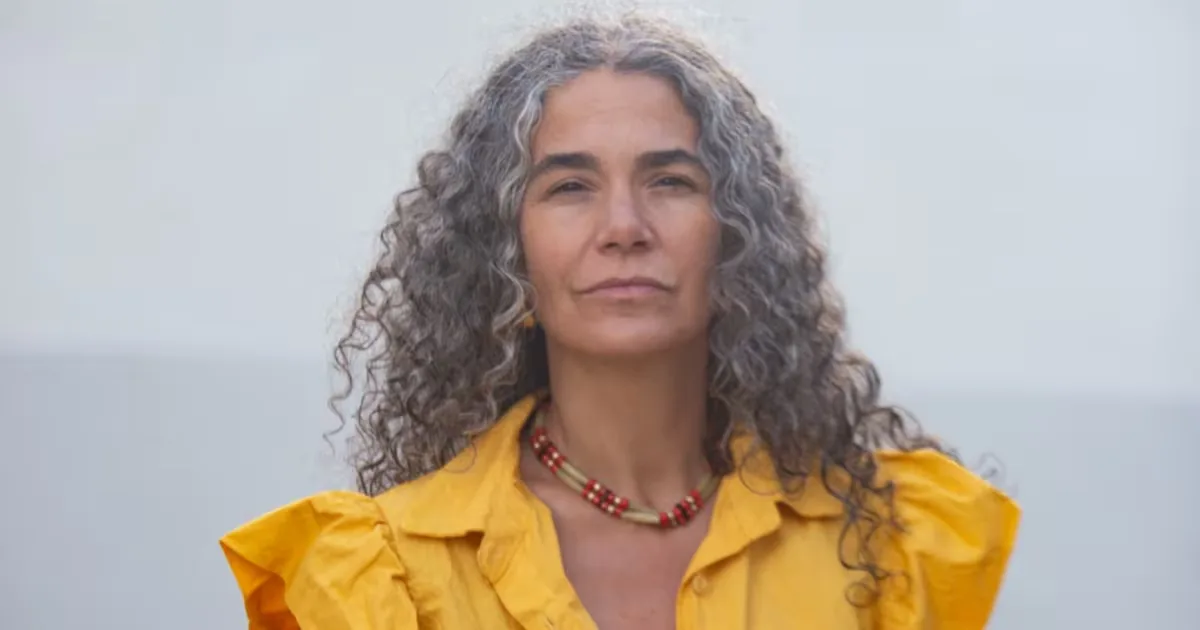







Marcela Ruiz’s relationship with nature began in childhood. She grew up in Valdivia, a city surrounded by rivers, forests, and enormous natural wealth, where she learned to observe the world with curiosity. “Since I was a child, I always wanted to understand how things worked. I had that scientific bug, like an explorer,” she recalls. That way of looking led her to dedicate her life to one of the most unknown territories on the planet: the ocean. Although it covers much of the Earth, much of what happens beneath its waters remains a mystery. It is precisely that vastness to discover that has guided her career.
Read more Work less and better: what the English experiment tells us about the future of work
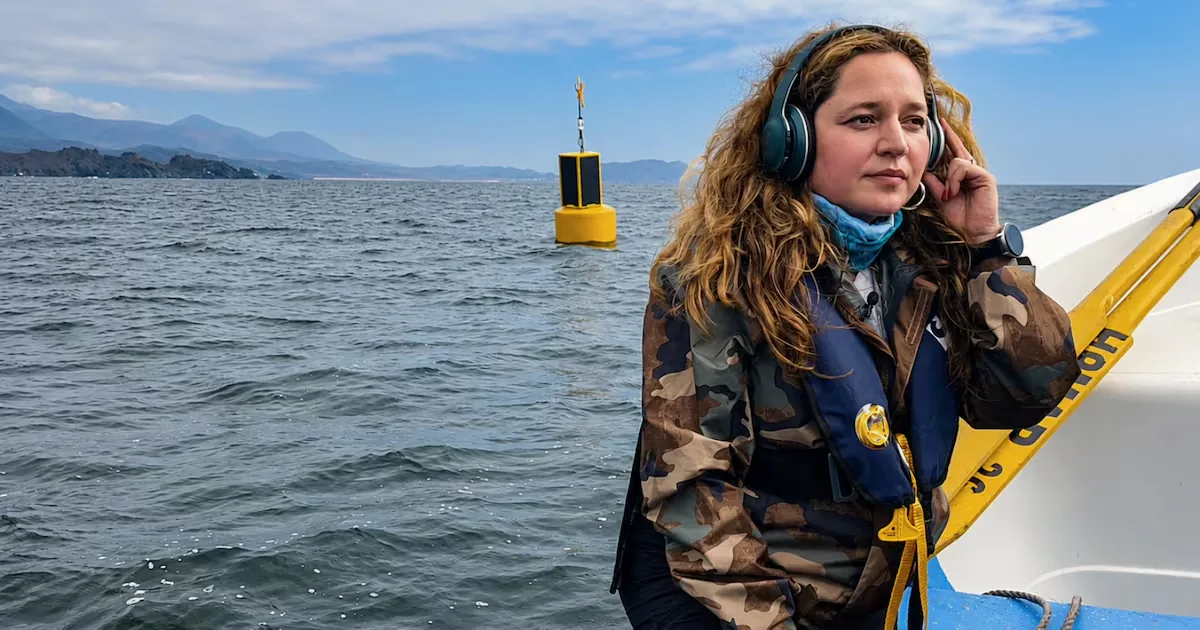
A marine biologist from the Universidad Austral de Chile, Marcela Ruiz is the director of Acústica Marina, a science and technology-based company born in Valdivia in 2020, which develops acoustic measurement, control, and monitoring systems to detect what happens beneath the surface. “We make hardware and software with artificial intelligence to capture these sounds in the sea and to understand what is down there,” she explains. Her work allows identifying the presence of fauna, vessels, seismic activity, and other events that cannot always be observed with cameras or satellites.
“The sea is a very dark environment. A few meters deep, light is lost, so everything that happens on the seabed can be captured through sound,” she explains. With that logic, the company develops buoys that are installed in the middle of the ocean and systems that collect acoustic waves, process them with artificial intelligence models, and trigger alerts when they detect, for example, the presence of whales near navigation routes. “The dashboard notifies you when there is presence, and that alert goes directly to the vessel,” she details.
The goal is to avoid collisions between vessels and cetaceans, a problem that is especially serious in our country. As demonstrated by a study published in April 2025 in the journal Marine Policy, Chile is the country with the highest whale mortality rate due to collisions with vessels worldwide over the last decade, with an average of five deaths per year.
Marcela points out that the country faces not only an environmental challenge but also a productive one. “We are a coastal country, we have ports, ships that dock at ports, fishermen, aquaculture, and shipyards. So, we cannot expect that to stop happening; on the contrary, it will grow,” she notes. Therefore, she believes the solution is not to stop maritime activity but to make it smarter and more sustainable.
“I went into technological development because I am on the side of the solution,” she states. For her, the challenge is no longer just understanding what happens underwater but turning that knowledge into tools capable of generating a real impact. “The solution is to make technology available so that the industry is more sustainable,” she proposes, convinced that science and innovation must work hand in hand to build a more responsible relationship with the sea.
Read more Clashes over road clearing in Bolivia leave at least 35 injured
However, Acústica Marina’s work goes far beyond whales. The company also develops systems to collect oceanographic and meteorological data, monitor the noise emitted by vessels — a requirement driven by guidelines from the International Maritime Organization — and detect other marine species. “It is a dual technology,” Ruiz explains. “It serves the industry because it can have in situ data for its operation, but it also serves defense, maritime security, and the conservation world.”
The story of Acústica Marina is also that of a founder who has moved between research, management, and entrepreneurship. Before creating the company, Marcela had already led projects, secured funding, formed teams, and driven initiatives from the university. “I have always moved from the idea to doing it, going through management and project evaluation,” she summarizes.
That leadership has also meant making her way in a world where science, technology, and innovation are still mostly led by men. “Institute heads and those who manage funding for large projects are mainly men,” she points out. However, she believes her way of facing those spaces has been key. “I am very straightforward, very much about not staying silent, about saying what I think. I do not back down.”
Today her focus is on the long term. She imagines a much more monitored ocean and a country with greater technological capacity to manage its coasts. “We know that with data it is the only way to have effective ocean management,” she states. In her view, that remains one of Chile’s great challenges: “Today it has no operational capacity for its national ocean policy or management areas because it lacks technology.”
That conviction also marks the course of Acústica Marina. The goal is to install more equipment in the sea, generate information, and contribute to maritime activity, conservation, and public policies advancing in the same direction. “That is where we want to be, on the side of technological development for ocean monitoring and thereby provide a sustainability tool.”