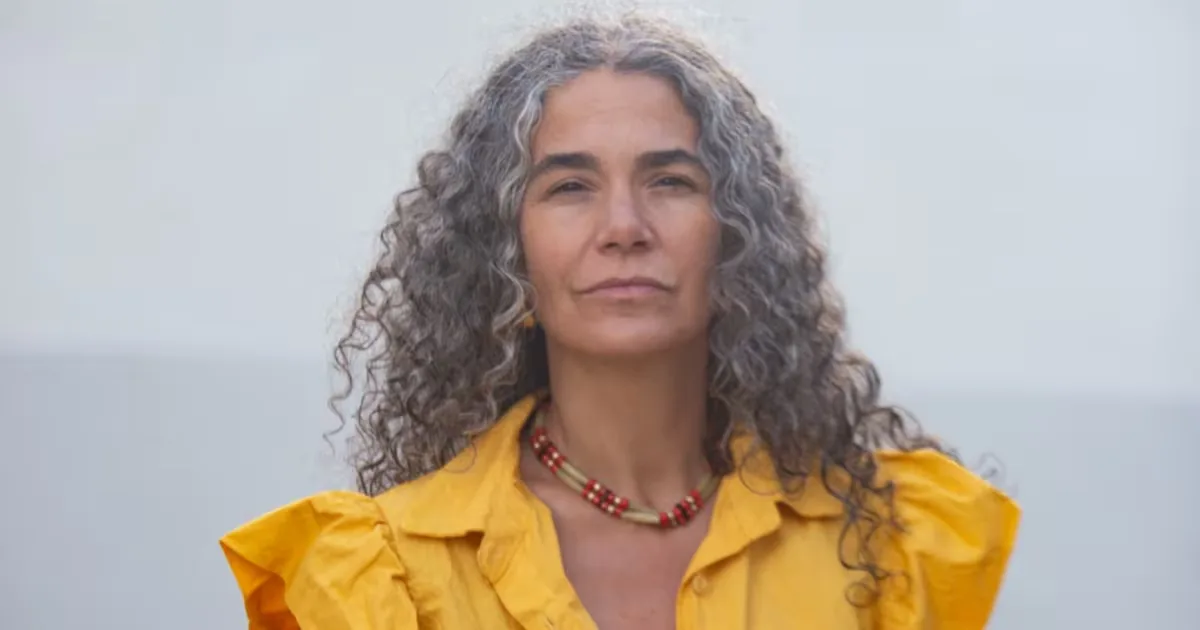









Life has two halves, but culturally we were taught to prepare only the first. For decades, approaching 50 years old was associated with the beginning of decline, the empty nest, and a silent invisibility. However, today psychology and sociology have named a phenomenon that thousands of women experience globally: madurescence.
Coined at the end of the 20th century and driven by increased longevity, this concept defines that transition that usually begins around 45 or 50 years old, when one becomes aware that life is finite. Just as adolescence stirs the body, identity, and relationships to give way to adulthood, madurescence is the bridge to the second half. A process where the “container” we built in youth — family, work, roles — is strained to decide what we want to fill it with.
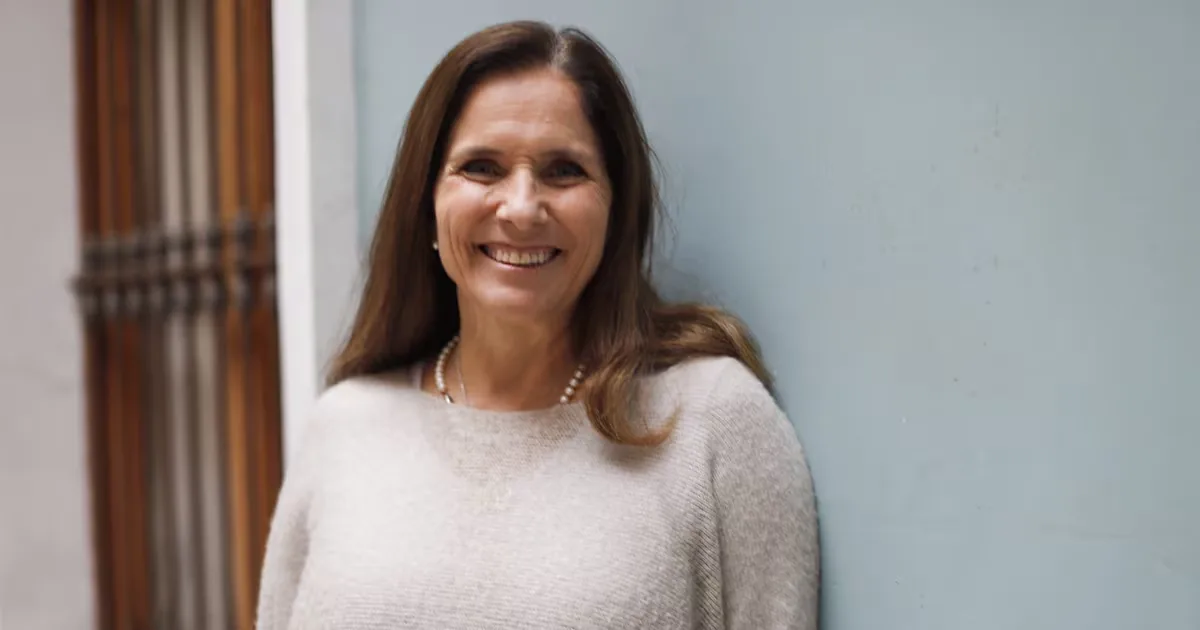
In Chile, one of the few voices that has delved into this stage is Trinidad Ried (56), a journalist and educator with more than 30 years of experience in human development and founder of Colegio Santa Cruz de Chicureo. With over 60 books of essays and stories published, Trinidad makes the leap with her first novel, “Encuentro con la soga.” In this conversation, she unpacks the pains, challenges, and liberating strength that arise when women decide to face their “ties” head-on and fly free.
– The concept of madurescence breaks down the old idea of the “midlife crisis.” From what you have researched, why do 50 feel more like a rebirth for women today?
We grew up in a culture that transmitted very limiting beliefs about how we should be. Many of us adapted to receive the love we thought we would only get by being good, helpful, pleasant, and taking care of everyone else. This produced a deep tension between the mandates and who we really were, as well as a strong disconnection from our body, our needs, our ideas, and our most authentic feelings.
That is why a well-lived and accompanied madurescence can become a wonderful journey back to authenticity, freedom, and an inner peace that has often been scarce. It is breathing new air again, accepting who we are, loving ourselves better, and recognizing that our uniqueness can be a valuable contribution.
– We grew up seeing our grandmothers at 50, but not women who owned their lives at that age. How do we invent a model that didn’t exist?
This generation has few clear references. Since the mirror is fragmented, we have to reconstruct it with pieces of those who came before us: we rescue the bravery of a grandmother but let go of her distance; we take the freedom of an aunt but discard her chaos. This way, we build our own mirror with what resonates with us. However, this identity only strengthens in community. Insecurity feeds on loneliness, while friendship and sisterhood give us the courage needed to overcome that painful feeling of not being “good enough.”
– Your first novel is titled “Encuentro con la soga.” What are the most common invisible ties that women drag from childhood and only at this stage dare to face head-on?
In the novel, I expose thirteen “ties,” such as constant postponement, the shame of feeling insufficient, guilt, perfectionism, control, and obsession with image. The complex part is that they don’t come alone: they tangle with each other forming a true “mental clutter” that suffocates us and prevents us from being authentic. Thus, we move forward with the handbrake on for fear of being criticized, rejected, or left alone. Madurescence — which is also a process men experience — is the invitation to face those ropes, discover where they come from, and start untying them.
Read more Spanish Civil War: The open wounds 90 years after the start of the conflict
– It is said that at this stage women free themselves from the “species plan” —raising children, fertility, and validation—. What is that day like when a woman realizes she no longer has to meet anyone’s expectations and begins to be an end in herself?
Care and motherhood are valuable, but conflict arises when we dissolve ourselves in them. Liberation does not happen overnight; it is a slow and sometimes irregular process. Freedom is won by opening small cracks of authenticity in our routine: by saying what we think, setting a boundary, resting without guilt, or attending to a postponed desire. This awakening inevitably shakes our relationships. The environment must learn to relate to a woman who is no longer willing to nullify herself for others to be well. It can be a painful process, but it is the necessary transition toward more adult, symmetrical, and real bonds.
– Between meditating at dawn, training, working as if you had no children, and being a mom as if you didn’t work, today there are many hyperactive women. Is that demand a shield to avoid connecting with emptiness, loneliness, or fear of aging?
The perfection paradigm has turned “reinvention” into a new demand. We train and take care of ourselves, but sometimes we use that hyperactivity as armor to escape from ourselves. We need to harmonize doing with being. Today silence makes us dizzy because we ignore our interiority, where our wounds live, but also our peace and gifts. If we only cultivate what we show, it is impossible to love ourselves. Sometimes, I feel our society suffers from a deep disease of lovelessness.
– Adolescence is marked by a hormonal and bodily revolution, and madurescence — with menopause in between — is too. How do we reconcile with a changing body in a society that still worships eternal youth?
We need a true personal and collective re-evolution about what we consider transcendent. We must question the superficiality of our culture and the business behind the cult of eternal youth. All stages of life have light and shadows: a young woman may have smooth skin but lives with the uncertainty of building her future. In contrast, in maturity wrinkles and gray hair appear, but also a more settled life, greater experience, and a much deeper and kinder understanding of oneself.
– If you could give advice to a woman who is experiencing the vertigo of turning 45 or 50 and feels lost, what would it be?
Each woman brings a different story and constitutes a complex world to unravel. First, I would tell her not to fear: this transition can be painful, but it opens a necessary stage to emerge freer and reconciled with her story. The first knot to look at is postponement. To untie it, I would suggest starting with something simple: ten minutes daily of solitude to write what she feels, without filters. That small moment of honesty outside daily responsibilities can be the beginning of her most conscious life.
__
Next meeting: To talk about this topic, Trinidad will participate in Comunidad 29, conversations that every month a group of women have around the gnocchi ritual and discuss what matters. More information at: https://www.instagram.com/29comunidad/.
Read more Or let us swear to die with glory: a story by Jaime Bayly