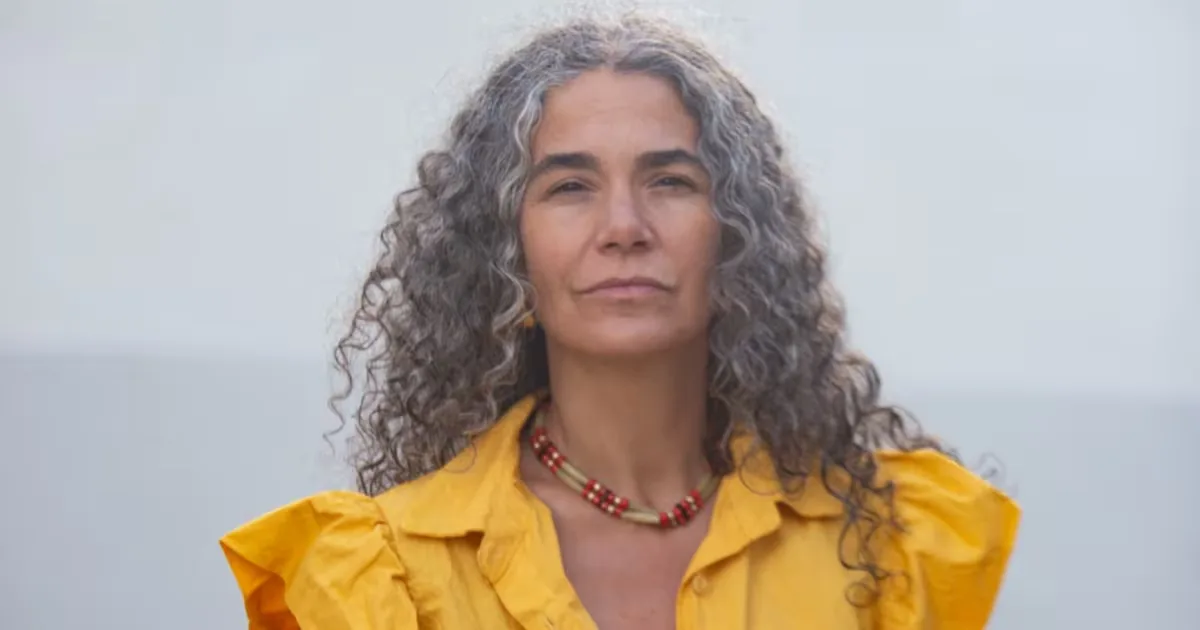



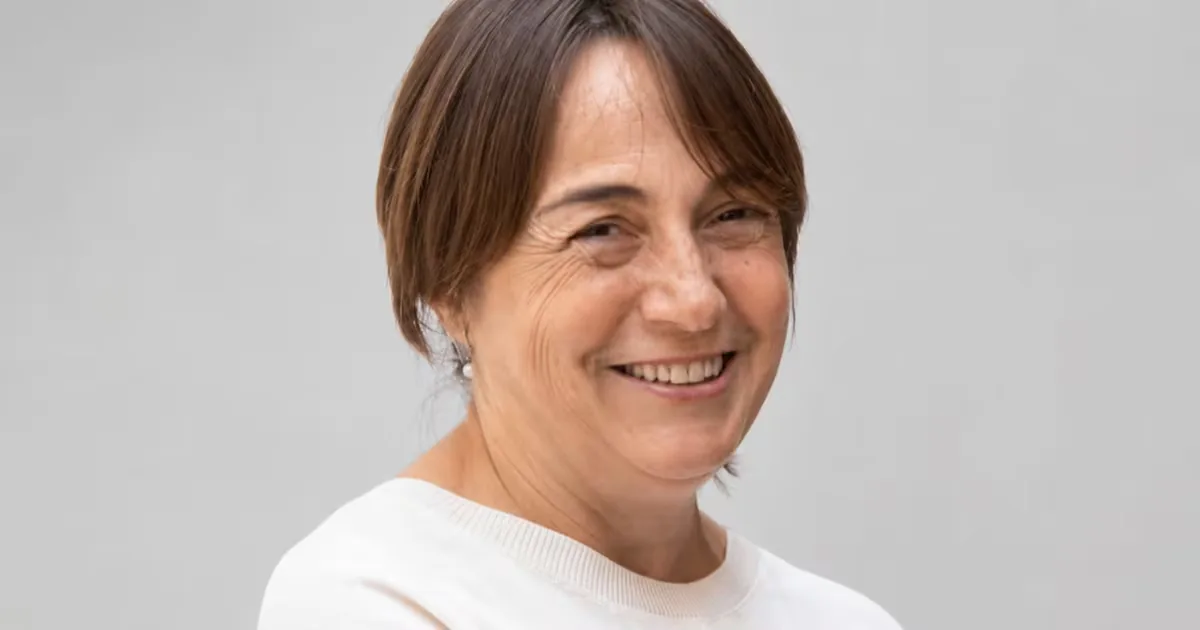
When the Spanish Gemma Carbó, doctor in Educational Sciences and member of the Culture Commission of the Organization of Ibero-American States (OEI), was conducting her doctoral research, she looked for the laws that had been passed in Spain in the late 1970s to compare them with the current ones. One of the first findings was that in those years education and culture were talked about as two elements that should remain together. Five decades later, education is linked to innovation, transfer, knowledge, but culture has been left off the list. A serious mistake, she says, because when culture is not part of the classroom, then “the meaning is lost.”
Read more The challenge of Petro to catapult Cepeda as the heir of the left in Colombia
This month the IV Teaching Meeting of the La Moneda Cultural Center was held, an event that brought together teachers, researchers, and cultural agents to reflect on the contribution of arts and culture in the face of the problems of violence, coexistence, and well-being currently affecting educational communities. Gemma was the international guest. In her presentation ‘The school as an affective and cultural landscape’ she reflected on the need to reconnect learning with other dimensions, questioning educational models focused on performance and content transmission. “Knowledge is not only in textbooks, but in the life surrounding the school; in museums, in communities, in the streets, in libraries, in ancestral knowledge (…) The school cannot remain closed,” she says.
According to her explanation, it was neoliberalism that led culture to become just another space of consumption and leisure outside work, and education as a space for training for the labor world.
— And what did we lose when that distance began to occur?
If everything we do in school is not inscribed in this need to be individuals who participate in a community environment — which is culture — one does not see the usefulness of what is happening in school; one does not see the connection between what they are telling you and your real needs. The meaning is lost and the loss of meaning causes demotivation, disconnection, apathy. For me, recovering the connection with culture is recovering the connection with life.
— And if that separation has been established for so long, how does one begin to rebuild that bond?
I believe that the fact that there is increasing diversity of origins, aesthetics, backgrounds, ways of living in our classrooms is making this connection increasingly necessary. Because what happens to us? If we do not ask our group of students, who are they? Where do they come from? What songs do they sing at home? What music do they like? What stories have marked their childhood? It will be very difficult to connect with them. So, you can start with something as simple as this: knowing that in the classroom there is an infinite wealth of artistic and cultural opportunities, and that this is your subject matter. I remember a research we did with young people at a UNESCO convention, and the first thing we asked them was, what do you like? And everything they liked was forbidden at school. We are talking about music, literature, which maybe is not what you are teaching here, but it is music and literature. So I think the best thing is to start by letting in again what life gives us into the school: what song lyrics are moving you now, what novels, what books, what poems, what plays.
— Why is it so hard to make space for those other experiences within the school?
We still have a certain mistrust of what is different. We tend to think that the school, and partly it is its function, is a space of equality. But maybe it is not equality, it is equity, which is different, because equality standardizes. And precisely now what we need is the opposite, that diversity can be managed in such a way that it does not go against the equity that the school must guarantee. This puts the teacher in a difficult position, because it means leaving their comfort zone, which is education as we have understood it until now, and entering a process of accompanying realities and collective construction.
It is scary because it is true that in some cases you have the feeling that either you lose authority or you do not have enough capacity, but the teacher should increasingly be a pedagogue, a companion, and a connector of realities, creativity, and possibilities in the classroom. We must think of a training of trainers that has this perspective and works on these skills and capacities.
VIOLENCE
During her days in Chile, Gemma managed to get an idea of the situation of Chilean education, specifically the figures and cases of violence that, according to her view, are not very different from what happens in other countries. “The school security plan being proposed here coincides with a very similar one that has just been launched in Catalonia, and which has been highly questioned,” she says. And she adds: “Responding to violence with security rules has historically proven not to work.”
Read more Trump postpones decision on Iran proposal
— What works?
Artistic and cultural education should be the alternative. I have mentioned it as the vaccine: violence is a virus that spreads and is very dangerous, global, and we need to face this virus as we have done in other fields. There is scientific research that supports this; that art allows the brain to be plastic. Neuroscience has shown us that learning occurs when knowledge manages to link with emotions and experiences. An environment that favors creativity and participation also favors sociability, empathy, and the ability to build community. That is why artistic education cannot be understood as something accessory. Rather, it is a fundamental dimension to think about how we want to coexist and learn in our schools. And in that sense, it seems to me that we are facing a moment in which there is a great responsibility for those of us in these fields because either we prove that we really are the vaccine, or we already know the alternative.
— Those who defend that alternative argue that it is a faster solution.
Yes, but I was thinking, at these moments when security forces appear in an educational center, what should be the reaction? Well, let’s make this an artistic educational project. Let’s involve these security forces in a collective discussion about why, for what, how, where. Let’s turn it around, because we already know what quick solutions correspond to.
— In your presentation you spoke about the dimension of care within educational communities, what is its role in this?
To educate also means to care and understand that no one can learn, create, or connect if there are no minimum conditions of well-being, listening, and recognition. We are vulnerable beings and dependent on others, and in that context artistic education can open very important spaces to rebuild bonds, sensitivities, and ways of coexistence.
— In those “others” you also referred to nature…
This is a reflection from ecologies and feminisms: the language of modernity has separated us from nature and life. It has led us to a concept of urban, industrial progress, of working with the head, with artificial intelligences, with algorithms, which disconnects us, first from the body, which is the first space of nature, and second, from the natural environment. Added to this is that for many years migrations from the countryside to the city created a narrative that the countryside was the space of violence, of the primitive, of what had to be left behind, and that working with hands was a thing of another era. But this discourse must be countered, because we know that green must enter the classrooms again; that this is connected to our emotional well-being and also will make us more aware that we are on a limited planet, where not only is there a relationship between humans, but between living beings, and that everything is in a balance that if broken, we disappear.
— How can we highlight this when in parallel we have a lot of information saying that artificial intelligence is the future?
I believe that reality imposes itself there. At the moment there is a global Covid virus, at the moment there are blackouts lasting several hours, at the moment there is an oil crisis, droughts threatening any form of existence, the evidence that we are vulnerable and that we will be more so should help us prioritize what gives meaning to our lives and our coexistence. And be very critical of this discourse that science will save us. Because we know in advance that all the computers guarding this artificial intelligence, if they do not have water to cool down, will not work, and that they consume incredible amounts of energy that if there are fires or storms, cannot be produced. Everything falls by its own weight and I think this awareness of the vulnerability of human life reconnects us with the fact that we are nature and that machines will not be able to solve certain issues. Does this mean we should not use it? No, absolutely not. But the uncritical discourse about these tools is perverse. Because deep down it marks a very clear ideology of what we put at the center: economic benefit? The growth of a few at the expense of what? That they go live on Mars and we stay here unable to live?
— Finally, are we still in time to make these improvements with our current childhood?
I have the feeling that it is like climate change: we are in time, but we have little time left. First, those of us working on these issues have to empower ourselves and take much more responsibility, be in the arena of daily political discussion. How? By learning to work with other professionals and researchers and applying rigorous systems, demonstrating evidence, evaluating, betting on these issues. That is, there is work from the micro level which is from each school, from each teacher, from each artist, based on daily practices, and there is work from the macro level, which is creating networks, having political agency and above all a lot of commitment. It still happens that from social sciences, from education, culture, art, there is a lot of prejudice that we have nothing to say in the face of major political, social, and economic discussions. And that is not true.